
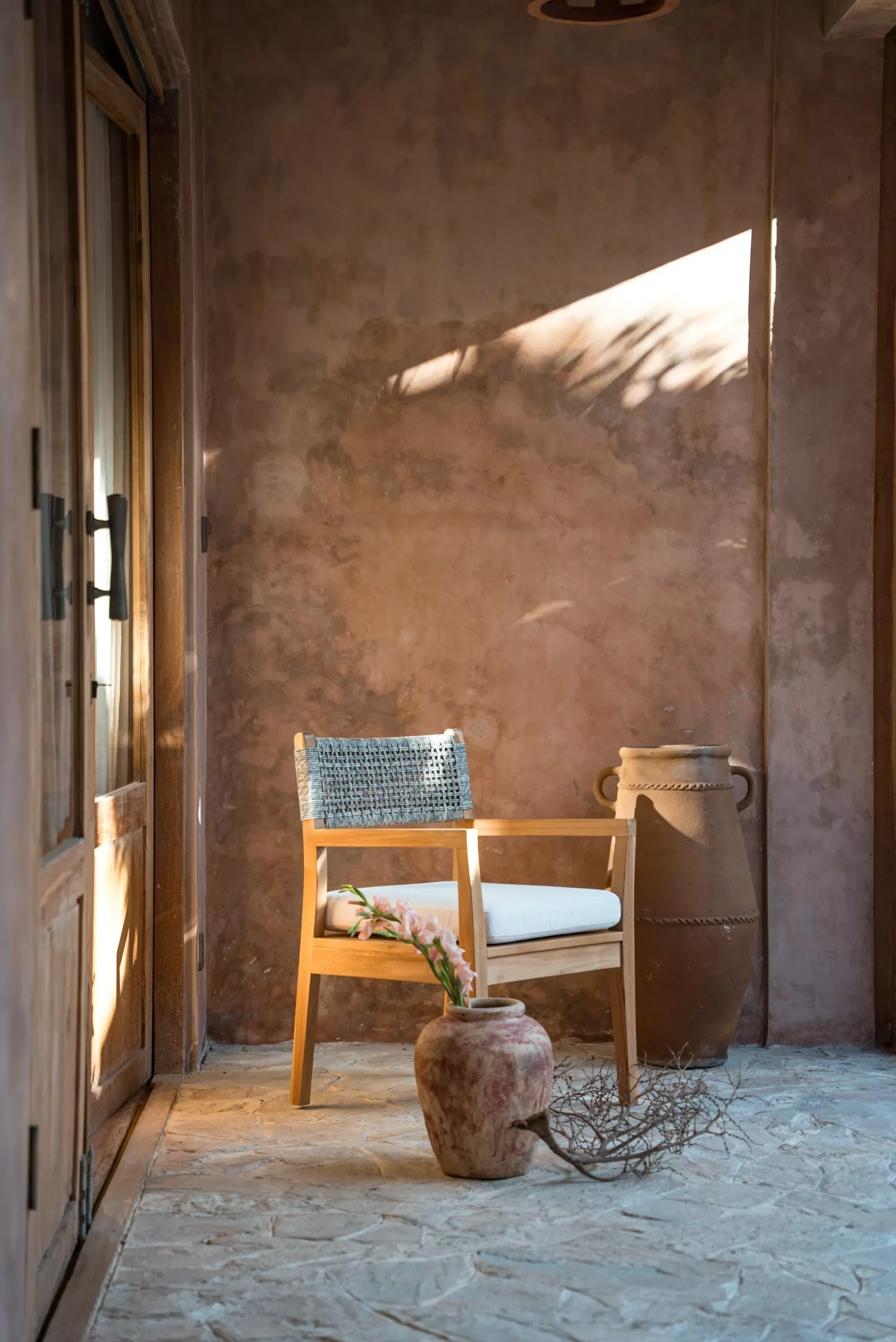
27 Chair Design Rules That Determine How Your Living Room Feels to Everyone in It
Disclosure : This post may contain affiliate links or paid partnerships. I may earn compensation if you click a link or make a purchase, at no additional cost to you. See my disclosure for more info.
Walk into a beautifully designed living room.
You don’t analyze it. You just feel it.
Something about the space makes you want to sit down, settle in, stay a while. It feels welcoming. It feels thought-through. It feels like a room that knows what it’s for.
Now walk into most living rooms. Including, maybe, your own.
The furniture is fine. The pieces are decent. But the feeling isn’t there. It just sits. It doesn’t invite.
The reason is almost always the chairs.
Not because they’re ugly — but because the decisions made around them were never fully conscious. The scale. The placement. The material. The orientation relative to everything else.
Chairs shape how people move through a room, where they settle, how long they stay, how the room feels to be inside. They are the room’s social and spatial architecture.
These twenty-seven rules will help you understand what that architecture should look like — and how to fix it when it doesn’t.
Proportion and Shape: The Foundation of How a Room Reads
1. Scale your chair to the actual room, not the product photo.
Furniture photographs compress spatial relationships. A chair that photographs as sleek and minimal can occupy a third of a small living room in real life.
Tape the exact footprint before ordering. Stand in different spots in the room and look at it. Walk through the space with the outline there. If the room feels smaller with the tape, the chair is the wrong scale.
2. Offset hard geometry with one curved chair form.
Rooms built entirely from straight edges — rectangular sofa, square shelving, angular media unit — produce a subconscious visual tension that people feel as discomfort without identifying its source.
One rounded chair resolves that tension. The room feels gentler. More approachable. More like a place where people exhale when they sit down.
3. Bring chair height down to raise the room’s perceived ceiling.
Low-profile seating creates a proportional relationship between furniture and ceiling that reads as spacious. The higher the clearance between the top of the chair and the ceiling, the more generously the room’s height registers in the eye.
4. Opt for exposed legs over solid bases.
Open-leg chairs — tapered wood, metal pins, hairpin forms — allow the eye to travel across the full floor. That continuity signals space.
Solid-skirted bases interrupt it. The room feels segmented and heavier, even with the same amount of open floor in total.
5. Anchor the room with one oversized chair chosen for the purpose.
There is a meaningful difference between a chair that is too large because nobody measured and a chair that is deliberately generous because the room called for an anchor.
A substantial wingback or deep club chair chosen for its presence changes the room’s psychological gravity. Everything orients around it without being told to.
Color and Material: What People Feel Before They Think
6. Introduce visual contrast between chairs and sofa.
When an entire seating arrangement is a single tone and material, it presents as one flat visual element. There’s nothing for the eye to discover.
Contrast — a chair in a darker, warmer, or more saturated tone beside a neutral sofa — creates visual depth and movement. The room feels designed. People sense that decisions were made.
7. Use material texture to add depth without adding color.
Texture affects how people perceive a room at a preconscious level. A bouclé chair beside smooth cotton reads as richer, warmer, more layered than either material alone.
In neutral-palette rooms especially, surface variation is what the eye returns to. It sustains interest the way color would, without the commitment.
8. Choose fabric that holds up under real daily use.
Rooms that are used look lived in. That’s desirable. Rooms that are used and wearing badly look neglected. That’s not.
Performance upholstery maintains the designed appearance of the room through actual occupancy. It’s a functional choice with a direct aesthetic consequence.
9. Let one chair in the room be defined by its color.
Color communicates before content does. One chair in a genuinely saturated tone — terracotta, cobalt, deep sage — tells everyone who enters: someone made a choice here. This room has a point of view.
That signal is worth more to the feeling of a room than almost any other single decision.
10. Include leather for its warmth and its character over time.
Leather reads differently from fabric at a sensory level — it implies substance, permanence, investment. And a leather chair that develops patina over years of use communicates something no new piece can: history. Comfort. A room that’s been genuinely inhabited.
11. Design the back of any chair that floats in the room.
When a chair is visible from multiple sides, its back becomes part of the room’s design language.
A back with visible craft — structural framing, tufted upholstery, carved detail — contributes to the room’s composition from every angle. An unfinished back is a missed opportunity at every viewing angle except the front.
Layout: The Architecture That Makes Rooms Feel Inhabited
12. Pull every chair forward from the wall.
Perimeter furniture layouts are a learned, cultural habit — not a design principle. They create large empty centers and make rooms feel more like corridors than rooms.
Chairs pulled even slightly forward form a defined center. The room becomes a place people enter, not one they travel along the edges of.
13. Orient chairs to create natural social geometry.
Human conversation is structured around facing each other. Seating arranged at thirty to forty-five degrees toward a central point supports that structure.
Chairs aimed at walls or parallel to one another work against it. The furniture layout should feel like an invitation, not a waiting room.
14. Build a reading corner with one chair and two supports.
A side table, a reading lamp, and a good chair in a corner create a zone with distinct purpose.
Purpose is what makes rooms feel inhabited rather than staged. A reading nook tells visitors: someone thought about how people actually use this space. That communicates care.
15. Frame a fireplace symmetrically with a matched chair pair.
Symmetry is one of the oldest tools in the psychological vocabulary of design. Two chairs flanking a firebox create a bilateral balance that the human eye registers as stable, complete, and formal — even when everything else in the room is relaxed.
16. Use a single chair to establish zone edges in open-plan rooms.
Without clear spatial boundaries, open-plan rooms feel unresolved. People aren’t sure where to sit or where to move. A chair placed at the outer edge of the seating arrangement creates a soft perimeter — a clear beginning and end to the living zone that makes both areas feel more purposeful.
17. Direct your most comfortable chair toward the room’s best view.
When the best seating faces the best view, the room signals that someone considered what it would feel like to be inside it. That act of consideration is what distinguishes rooms people love from rooms they simply occupy.
Surface and Detail: The Signals That Register as Quality
18. Upgrade the legs on any chair that reads as budget.
Furniture legs are the most immediately visible craft indicator on a chair.
Stock legs signal stock price points. Walnut tapers, brass-capped feet, matte metal pins — these signal something else entirely. The swap costs under twenty dollars and takes minutes. The perceptual effect is immediate.
19. Style one chair with a single contrasting lumbar pillow.
A lumbar pillow whose material differs from the chair it rests on creates a micro-layer of complexity. The chair reads as styled rather than bought and placed. One pillow achieves this. More than two undoes it.
20. Prioritize visible craft in every chair you consider.
Nail-heads. Exposed wooden frames. Precise topstitching. Structural hardware.
These elements communicate that the chair was made, not manufactured. People feel that distinction when they sit down and when they look across the room at the piece. It changes how they assess everything around it.
21. Let at least one chair have a genuinely distinctive form.
Rooms populated entirely by conventional chair shapes read as assembled, not designed. One chair with a compelling sculptural silhouette — an unusual curve, an architectural back, a continuous flowing form — introduces a creative register that changes the room’s whole mood.
Function: What Chairs Actually Need to Do
22. A swivel chair changes how a room functions.
A swivel chair reorients to every activity in the room without physical relocation.
In multipurpose living rooms, this behavioral flexibility is one of the most genuinely useful properties a piece of furniture can have. It changes not just the function of the chair but how people use the room around it.
23. A chair paired with an ottoman becomes a different object.
The chair invites sitting. The ottoman invites staying.
Together, they create a destination within the room — a place with its own gravitational pull. Rooms with destinations feel generous. Rooms without them feel like arrangements of furniture waiting for a purpose.
24. A throw draped over the arm signals permission to relax.
This is a behavioral design element. A casually draped throw tells guests: this chair is for using, not admiring. Come sit. Stay a while. Put your feet up if you want.
That permission — communicated through one piece of soft furnishing — changes how people inhabit the room.
What Goes Wrong Without Anyone Noticing
25. A chair nobody sits in is a problem, not a design feature.
Sculptural chairs that are cold, hard, uncomfortable, or awkward to rise from end up sitting empty. They take up space. They collect visual attention. They don’t contribute to the room’s actual function.
Every chair in a living room should be one that a person actively chooses to sit in during a normal evening. If it isn’t, it doesn’t belong in the primary living space.
26. Wrong seat depth produces permanent postural discomfort.
A chair with too much depth pushes the occupant into a slouched or strained position. A chair too shallow provides no support and makes long sitting feel uncomfortable.
Neither creates the experience of ease that a well-functioning living room should produce. Test seat depth before purchasing. Sit all the way back. Feet should reach the floor. They should stay there comfortably.
27. Seasonal rotation keeps a room from becoming invisible.
Over time, a static room stops registering. The eye passes over familiar arrangements without reading them.
Rotating a seasonal chair — rattan in summer, velvet in winter — resets the eye. The room stays visible. It stays felt. That’s a psychological maintenance practice as much as a design one.
The Room Is Already Responding
These twenty-seven rules aren’t just about what the room looks like.
They’re about what the room does to the people inside it. How it makes them feel. Whether they settle, stay, and return.
Chairs are where the room’s social and spatial logic lives.
Fix the chairs, and you fix the room’s feeling — which is ultimately what you were trying to fix all along.
Start with one principle. Apply it this week. The room will respond.