
29+ Ways to Make a Sectional Living Room Look Like a Designer Did It
Disclosure : This post may contain affiliate links or paid partnerships. I may earn compensation if you click a link or make a purchase, at no additional cost to you. See my disclosure for more info.
Here’s a conversation worth having.
You have a living room that should be working. You have a sectional. You have decent furniture. Yet every time you sit down in that space, something nags at you.
It looks like a room that’s been set up, not designed.
You’ve studied the rooms you love online. Saved countless images of spaces that feel warm, layered, and complete. Then you look at yours and feel the gap.
Why does it look so different?
The secret isn’t money. It isn’t a better sofa. It isn’t square footage.
It’s the decisions surrounding that sectional — from how it sits in the room to how the room is layered around it — that determine whether a space reads as designed or simply occupied.
Let’s go through every one of those decisions.
Starting now.
The Sectional’s Role in the Whole Room
Begin with this fundamental truth.
In a living room, the sectional is the gravitational center of the entire space. Everything — rug, lighting, art, accent furniture — orbits it.
Get the sectional moment right, and the rest of the room falls into natural order.
Get it wrong, and not a single stylish pair of throw pillows will make the room feel right.
How to Place It for Maximum Impact
1. Detach It From the Wall
Wall-hugging sectionals are the most common living room mistake. They produce a room that looks like a waiting area, not a home.
Move yours forward 8 to 12 inches. The room gains visual depth and instantly feels more spacious.
2. Use the L to Divide and Organize
The natural form of an L-shaped sectional already divides space. Let it do that work by positioning it between your lounge area and another function — dining, kitchen pass-through, or hallway.
The furniture creates structure without the need for walls or partitions.
3. Point It at the Room’s Star Feature
The fireplace, the TV wall, or a dramatic window view — that’s what your sectional should face.
The instinct to point seating toward the front door is almost universal. Resist it. Design for how you live there, not how guests enter.
4. Angle It Against Boxy Geometry
Square rooms have an inherent rigidity that straight furniture placement only amplifies.
Tilting the sectional slightly off the primary axis introduces dynamism and visual interest that transforms the feel of the room.
5. Corner-Place It in Expansive Open-Plan Rooms
Large open-plan spaces without defined seating zones feel unanchored. Positioning the sectional in a corner solves that immediately.
A round coffee table in front completes the vignette and carves out a clearly defined area within the larger open environment.
Practical Solutions for Smaller Spaces
6. Choose a Reversible Chaise for Layout Flexibility
In rooms of 250 square feet or less, a reversible sectional is one of the best investments you can make. Rearrange the chaise configuration whenever the mood or need strikes.
In a small space, flexibility is everything.
7. Lose One Arm for a More Open Feel
An armless end on the sectional eliminates a visual boundary. Without it, the eye travels farther and the room reads as more open and relaxed.
Designers use this sleight of hand all the time.
8. Show the Floor Under the Sofa
A sectional on raised legs lets light and sight travel beneath it. That continuous view of floor makes the room feel noticeably larger.
9. Harmonize the Sofa Color With the Walls
A sectional that reads as part of the wall behind it quietly reduces the visual load in a small room. Less visual noise creates a sense of more space.
Creamy white sofa against creamy white walls — the room softens and opens.
10. Simplify the Coffee Table Situation
A standard coffee table in a compact living room with a sectional creates crowding and poor traffic flow.
Nesting tables or C-tables deliver functional surface area while preserving the floor space you need.
The Styling Moves That Change Everything
11. Choose the Right Rug Size — Then Go Bigger
Your rug should be generous enough that every front leg of the sectional sits squarely on it.
A small rug under a large sofa reads as careless. Careless is the one thing a well-styled room cannot afford.
12. Arrange Pillows in Odd-Number Groups
Three or five. Not two or four.
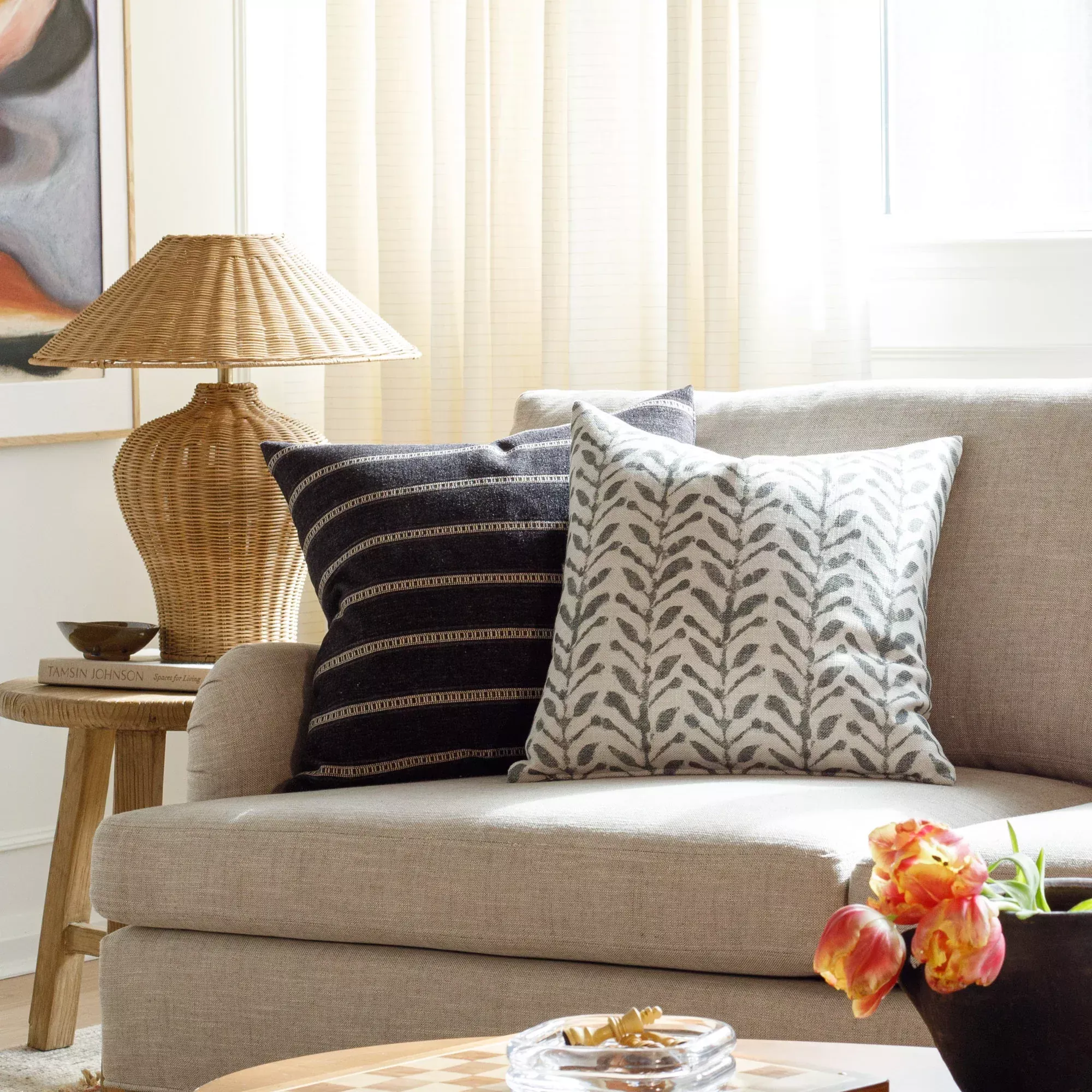
Odd groupings feel organic and interesting. Mix a velvet, a textured base fabric, and a patterned pillow within a cohesive color scheme — and the result looks styled with purpose.
13. Throw Something Textured Over the Chaise
The chaise side of a sectional tends to look sparse without attention. A chunky knit or a woven throw casually placed there adds richness and a sense of relaxed layering.
14. Light the Inner Corner
The corner where both sectional sections join is the perfect location for an arc lamp or a striking tall sculptural fixture.
It adds height, throws warm indirect light across the seating area, and makes the sofa feel framed rather than floating.
15. Hang Art at Sofa Height, Not Ceiling Height
Art belongs 6 to 8 inches above the sectional’s back. When it drifts higher, it loses its relationship to the furniture.
A disconnected composition reads as unplanned. An anchored one reads as designed.
Keep the art close and the whole wall reads as intentional.
Color and Fabric Choices That Age Beautifully
16. Go Bold With the Sofa Color
A rich jewel tone — deep teal, saturated indigo, or plum — makes the sectional the centerpiece rather than the backdrop.
Pair it with simple neutral walls and brass or gold accents for a look that reads sophisticated and confident.
17. Performance Fabric First, Always
This is the practical advice that saves you from regret.
Performance fabrics like Crypton and Sunbrella look like any standard upholstery. What sets them apart is that they’re engineered to handle whatever happens in a real home.
18. Light Base, Dark Accents — Always Works
A light-toned sectional with performance upholstery can handle daily life just fine. Add strong, dark cushions on top and the contrast creates something modern and graphic.
Cream plus charcoal or navy is a combination that doesn’t tire.
19. A Slipcovered Sectional Changes Everything
Slipcovers mean you can reinvent the sectional’s look without replacing it. Crisp and light for warmer months. Soft and cozy for fall and winter.
One sofa. Multiple aesthetics. One cost.
Arrangements That Actually Support How You Live
20. Fill the Open End With a Chair
A statement chair at the open end of an L-shaped sectional closes the seating arrangement into a U-shape.
Everyone faces in. Conversation flows without anyone twisting to engage. It’s the single fastest upgrade to a living room seating setup.
21. An Ottoman Beats More Sofa Every Time
An ottoman at the open end of the sectional is dramatically more versatile than extending the sofa. Use it as a footrest, a seat, or — set a tray on top — a functional impromptu coffee table.
22. Put a Console Behind the Floating Sofa
A floating sectional that leaves an empty gap behind it looks unfinished.
A slim console table fills that space and gives it function. Style it with lamps and a plant and the sofa’s back edge becomes a proper design moment.
23. Pair Two Sectional Pieces Across From Each Other
In larger rooms, positioning two sectional configurations facing each other across a coffee table creates an arrangement that feels balanced, generous, and perfect for entertaining.
The Details That Take a Room From Good to Memorable
24. A Round Table Softens All That Linearity
Sectionals bring a lot of straight lines and hard angles to a room.
A round or oval coffee table in front of one creates the contrast that makes a room feel balanced. It’s timeless design logic for a reason.
25. A Tall Plant at One End Changes the Whole Corner
A fiddle-leaf fig or birds-of-paradise placed at the end of the sectional does what furniture alone cannot — it brings organic life, visual height, and a softness to the corner that makes the whole arrangement feel lived-in.
26. A Picture Ledge Keeps Your Wall Art Flexible
Mounting a picture ledge above the sectional means your wall never has to feel permanent or static.
Swap art freely. Add pieces. Rearrange on a whim. The space above the sofa stays current and personal without commitment anxiety.
27. The Chaise Needs a Surface Too
Putting a side table at the armrest end is the obvious move. The overlooked move is adding one at the chaise end.
A petite round table at that end means you’re never reaching awkwardly for your drink while lounging — it solves a real problem most sectional owners have quietly tolerated for years.
28. Three Heights of Light — Non-Negotiable
One floor lamp. One table lamp behind the sofa. A pendant or ambient overhead fixture above.
A layered lighting plan is what gives a room warmth, dimension, and depth after dark. A single overhead light source produces the opposite — flat and cold.
Layer the lights. Transform the room.
29. A Bench Anchors and Completes the Zone
In a spacious living room, a long upholstered bench set a comfortable distance from the sectional creates a defined boundary around the seating arrangement.
It provides immediate additional seating for gatherings and gives the whole setup the sense of being deliberate and complete.
Now You Have the Tools
You’ve just walked through a complete, practical playbook for every challenge a sectional living room presents — from awkward layouts to lifeless styling to the details no one told you to pay attention to.
Save this somewhere you’ll come back to.
The next time you’re standing in your room feeling that familiar dissatisfaction, you’ll have a clear, organized set of answers for what’s wrong and exactly how to fix it.
The distance between a room you endure and one you look forward to coming home to isn’t about spending more.
It’s about choosing more deliberately.
That’s something you can do starting today.