
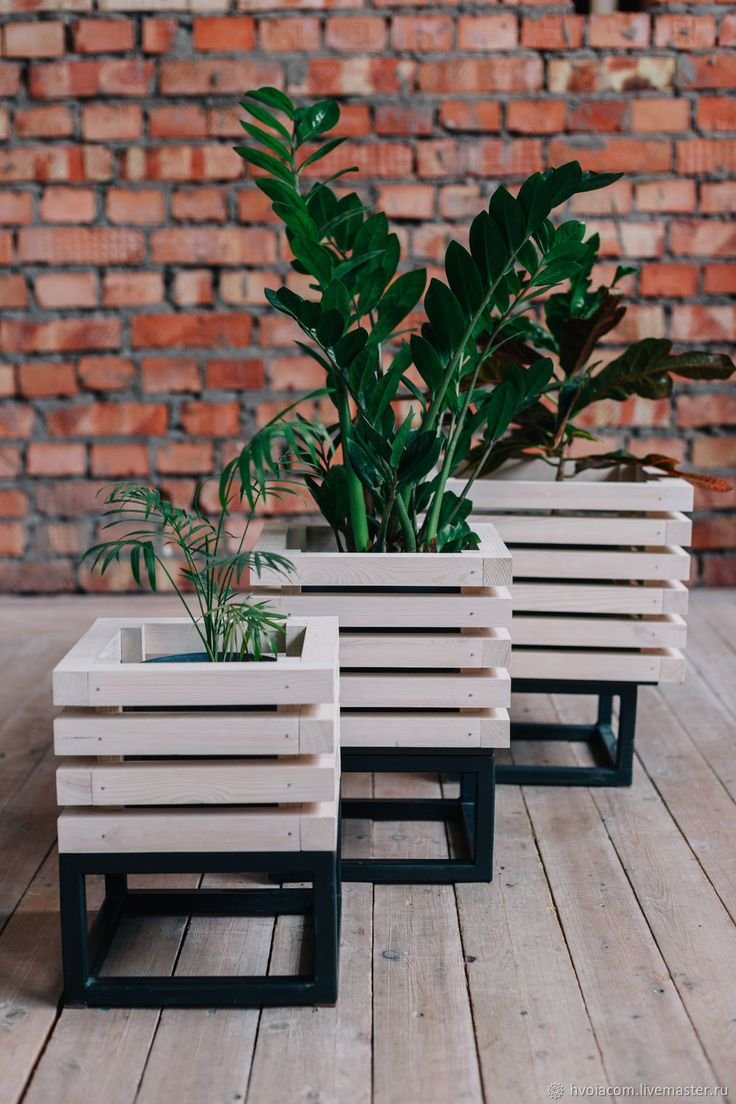
From Floor to Fabulous: 21 DIY Plant Stand Projects for Your Indoor Plant Collection
Disclosure : This post may contain affiliate links or paid partnerships. I may earn compensation if you click a link or make a purchase, at no additional cost to you. See my disclosure for more info.
Your plants are living their best life — just not exactly how you pictured it.
That gorgeous fiddle leaf you nursed back from the brink. The pothos that’s thriving maybe a little too enthusiastically. The succulent trio that seemed like a good idea at the farmers’ market.
They’re all here. They’re all alive.
They’re all sitting on the floor like they’re waiting for a bus.
Or they’ve colonized the windowsill. Sharing limited real estate with a half-empty coffee cup, a phone charger that belongs somewhere else, and three pieces of mail you’ve been meaning to open.
Or — and we’ve all done this — there’s one on a stack of books that seemed fine until you watered it. And then it was very much not fine.
You’ve scrolled past the plant stand listings online. You know the look you want. You also know that sixty to ninety dollars for a wooden platform with legs is a hard sell when you could spend that money on more plants.
Here’s the thing about plant stands: the best ones often aren’t the store-bought ones. They’re the found objects, the repurposed pieces, the things you made on a Sunday afternoon that make people say “Wait — you made that?”
Twenty-one of those ideas, right here.
From genuinely simple to satisfyingly creative — all of them beautiful, all of them affordable, all of them completely doable.
1. The Thrifted Stool Transformation
Walk into your nearest thrift store with one objective: find the weirdest, most forgotten little wooden stool on the shelf.
The more unloved it looks, the better. That’s potential, not a problem.
Sand it. Paint it. Let it dry.
Put your plant on it.
You just created a plant stand with genuine history and character for about five dollars. Try finding that at a furniture chain.
The small dings and brush marks? Those are not flaws. They’re the reason it has soul.
2. The Copper Pipe Stand That Fools Everyone
This one is the ultimate “wait, you made that?” project.
Three copper pipes. Three elbow connectors. One round wood disc. Twenty minutes of your time.
The result looks like something from a boutique plant shop that charges boutique plant shop prices.
It isn’t. It’s hardware store plumbing pipe and craft store wood. But no one needs to know that. The warm copper next to green leaves is one of those pairings that just works every single time.
3. The DIY West Elm Dupe
You’ve seen the hairpin leg plant stand at West Elm. You’ve seen the price tag at West Elm.
You left without it.
Good news: four hairpin legs ordered online, one round wood blank from a craft store, and about thirty minutes of assembly gives you the same look. The same mid-century modern aesthetic, the same clean metal-meets-wood combination.
For under fifteen dollars.
The only difference is that yours will have a story: “Oh this? I made it.” That story is worth at least forty-five dollars on its own.
4. The Corner-Filling Crate Tower
You know that corner in the living room that just sits there doing nothing?
Two or three stacked wooden crates with alternating open faces — one forward, one sideways, one forward — fills that corner with height, depth, and a multi-level plant display that actually looks intentional.
Each compartment holds a different plant. The varying depths and directions create genuine visual interest that flat shelving can’t match.
Paint them all sage green or chalk white if you want a put-together look. Leave them raw wood if you like the honest, handmade quality. Either direction is a win.
5. The Macramé Hanger You Can Actually Learn
If you’ve been intimidated by macramé, you’ve been overthinking it.
A basic plant hanger uses one knot, repeated. That’s genuinely all there is to it. The square knot. Over, under, pull through, tighten. Repeat.
One hour with a beginner tutorial and you’ll have a hanging plant display that adds warmth, texture, and height variation to any room.
Plus you can honestly tell people you learned macramé last weekend. Which sounds impressive and is technically accurate.
6. The Two-Dollar Design Statement
Ready for the most cost-effective item on this list?
One cinder block. One can of matte spray paint. Approximately ninety seconds of assembly.
That’s the project.
The result is a plant riser that creates genuine industrial-meets-organic tension — rough structural concrete supporting something soft and living. Interior designers deliberately create this kind of contrast in high-end spaces.
You created it for two dollars and change. Tell absolutely no one how easy it was.
7. The Vertical Plant Gallery
An old wooden ladder leaning against a wall is one of those ideas that sounds weird in theory and looks completely right in practice.
Every rung is a shelf. Every shelf holds a pot. The natural height variation gives you a cascading, gallery-style plant display that fills vertical space without touching much floor space at all.
Can’t find an old ladder? Build a simple one — two boards, a few dowels, some screws. It doesn’t need to be perfectly finished. Slightly rough-hewn is actually part of the aesthetic.
8. The Garden Hack That Became a Design Object
Of all the ideas on this list, this one generates the most “wait, what is that?” reactions.
A tomato cage. Flipped upside down. Spray painted matte black.
The wide ring that used to sit on the ground is now a stable base. The narrow ring near the top now holds the pot. The open wire structure in between creates an unexpected sculptural silhouette that people cannot immediately identify — they just know they like it.
Cost: whatever tomato cages cost at your garden center. Which is almost nothing.
9. The Trash-to-Treasure Tin Planter
Before the next tin can goes in the recycling, give it a second look.
Wrapped in natural jute twine from base to rim with hot glue securing each row, that tin can becomes a textured artisan planter that looks at home in any boho, rustic, or natural-material interior.
Make them in different sizes. Display as a grouped collection. The texture and natural color of jute photographs beautifully — these will be everywhere on your Instagram whether you meant them to be or not.
10. The Art Gallery Approach to Plant Display
The most common mistake in plant styling is trying to fit as many plants as possible into the display.
The most effective approach is often the opposite: one floating wall shelf, one exceptional plant, and nothing else.
The empty wall around it does what empty museum walls do around paintings — it signals importance. It says: this plant matters. It was chosen. It was placed here on purpose.
People respond to that. Rooms with one thoughtfully placed feature plant feel more designed than rooms with ten plants competing for attention.
11. The One-of-a-Kind Natural Stand
A cross-section of tree trunk is possibly the only plant stand that is genuinely impossible to replicate exactly.
The grain pattern, the ring count, the bark texture, the exact shape — no two are the same. When you find a good one, sand the top face smooth, seal it with clear polyurethane, and you have something that will outlast every other object in the room.
Set the most dramatic plant you own on top — a spreading monstera, a structural snake plant, anything with presence — and you have a combination that stops people in their tracks.
12. The System That Grows With You
Every plant person knows the problem: the collection keeps expanding, the display never quite fits anymore.
A pegboard display system solves this permanently.
Mount the board. Add pegs and shelves where you need them. Rearrange whenever you acquire something new. Expand whenever you’ve outgrown the current layout.
It’s a display system that never becomes obsolete, because nothing about it is fixed. It adapts. That’s the entire point.
13. The Chair That Found Its True Calling
Sometimes the broken thing in the garage was always meant to be something else.
That chair with the wobbly leg isn’t a failed chair. It’s a plant stand waiting to be discovered.
Remove the seat panel. Drop a pot into the frame opening. Let trailing vines drape over the legs.
It becomes a piece that tells a story — a found object given new life — and that narrative quality is the thing that makes people want to look at it, talk about it, and remember your space.
14. The Sculptural Pipe Grouping
Cut PVC pipe into five different lengths. Add small wood disc tops. Paint everything the same color.
Arrange as a tight cluster, mixing the heights in a deliberate rhythm.
The monochrome treatment is what makes this work — paint them all the same color and the eye stops asking “what material is this?” and starts asking “what is this beautiful sculptural grouping?”
White is classic. Matte black is graphic. Sage green is chic. Any of them work depending on your existing palette.
15. The Geometric Wire Cradle
Bend thick wire into a geometric shape — a cube frame is the most satisfying starting point — and set a pot inside.
The structure is open, so it doesn’t compete visually with the plant inside it. But the precise geometric angles create a strong graphic presence that draws the eye.
It’s one of those objects that looks minimal and complex at once. And it consistently makes people say, “That looks like something from a design shop.” For the cost of some wire and an hour with a pair of pliers, that’s a nice return.
16. The Window Garden That Does Double Duty
A slim shelf fitted across the window frame is one of those additions that makes an immediate, visible difference in how a room feels.
Plants in a window get the most light available in any indoor space. They grow faster, look healthier, and stay greener.
And the window itself transforms — from a view out to a living green frame that filters the light and changes with the seasons. Fresh basil for the kitchen, succulents for the study, trailing ivy for the bathroom window. All beautiful. All practical.
17. The Garden on Wheels
A rolling three-tier cart loaded with plants is one of those ideas that is so practical it almost feels like it should be on a gardening blog, not a styling one.
But roll one into a corner near a sunny window, style the tiers with a mix of pots in different materials and heights, and it looks completely intentional and charming.
The wheels are the real genius. Your garden moves where the light is. No plant is ever stuck in inadequate light again. It’s like giving your plants a car.
18. The Living Shadow Box
A simple open-fronted wooden box mounted on the wall turns a plant into wall art. Not “sort of like wall art.” Actual wall art.
The box creates depth and shadow around the plant. It frames the living material the way a shadow box frames a collector’s object. The plant is elevated — literally and aesthetically — from “thing sitting on a surface” to “thing that was placed with specific intention.”
Mount three in a row for a gallery wall that grows, breathes, and changes. No two prints ever did that.
19. The Stool, Basket, Plant Trifecta
Here’s a combination that requires zero construction and looks like you knew exactly what you were doing.
A woven seagrass basket inside a low wooden stool on top of a plant.
Three materials: wood, woven fiber, greenery. Three different heights layered. Three different textures in one small footprint.
That combination creates the kind of vignette richness that styled shoots have and average rooms don’t. And it took about thirty seconds to put together.
20. The Vertical Ceiling Garden
You’ve used up the floor space. The shelves are full. The windowsill is at capacity.
Look up.
A tiered hanging wire basket claims ceiling space — the one surface you haven’t used yet. Three tiers of plants cascading down toward the floor, each basket a different variety, filtered by the light from the nearest window.
It looks like it took effort and expertise. It required a ceiling hook, a basket set, and three plants. That’s genuinely all.
21. The Bookworm’s Plant Stand
The book stack plant stand is one of those ideas that’s either perfect or a disaster, depending entirely on execution.
Disaster: random books in different sizes, piled unevenly, with a plant just kind of placed on top.
Perfect: hardcover books with coordinating spine colors, stacked precisely and squarely, with a saucer underneath the pot to protect the covers, in a reading nook where books and plants sharing space feels completely natural.
The difference between those two outcomes is intention. Show the intention clearly. When it looks deliberate, it looks designed.
The Proportion Secret That Separates Good from Great
There’s one styling principle that applies to every single item on this list, and getting it right matters more than anything else about how the stand is made or finished.
Proportion.
Big, spreading plant plus tiny, delicate stand: the plant looks like it might topple at any moment. The stand looks overwhelmed.
Tiny succulent plus enormous pedestal: the plant looks lost. The stand looks like it’s waiting for something more impressive to arrive.
Match the visual size and weight of the plant to the visual size and weight of the stand. When that relationship feels balanced and deliberate, everything else follows. People will assume you spent more, built better, and knew exactly what you were doing. Because you did.
The Real Reason Rooms Never Change
Let’s be honest about what usually happens with home improvement inspiration.
The article is saved. The images are pinned. The browser tab stays open for two weeks. And eventually nothing happens and the tab closes and the plants are still on the floor next month.
This isn’t a failure of desire. You clearly want the space to look better — you’re here, reading this.
It’s a failure of the moment between “that looks amazing” and “I am now doing that thing.”
Bridge that gap this weekend. One project. One hour. That’s genuinely all it takes to start having a room that looks the way you’ve been imagining it.
Now: Pick One and Go
Go back to the beginning. Read through your gut reactions again.
One idea felt immediately possible. Pick that one.
Not the most impressive. The most possible.
Note what you need. Get it this weekend. Spend an hour building it. Put your plant on top.
Step back and look at what you made.
Your room will feel different. Not because you spent a lot. Not because you’re suddenly a designer. But because you made something with your hands and set it down with purpose — and that intention shows up in a space in a way that store-bought things simply don’t.
Your plants deserve that. Your room deserves that.
You deserve that.
Go build something this weekend.