
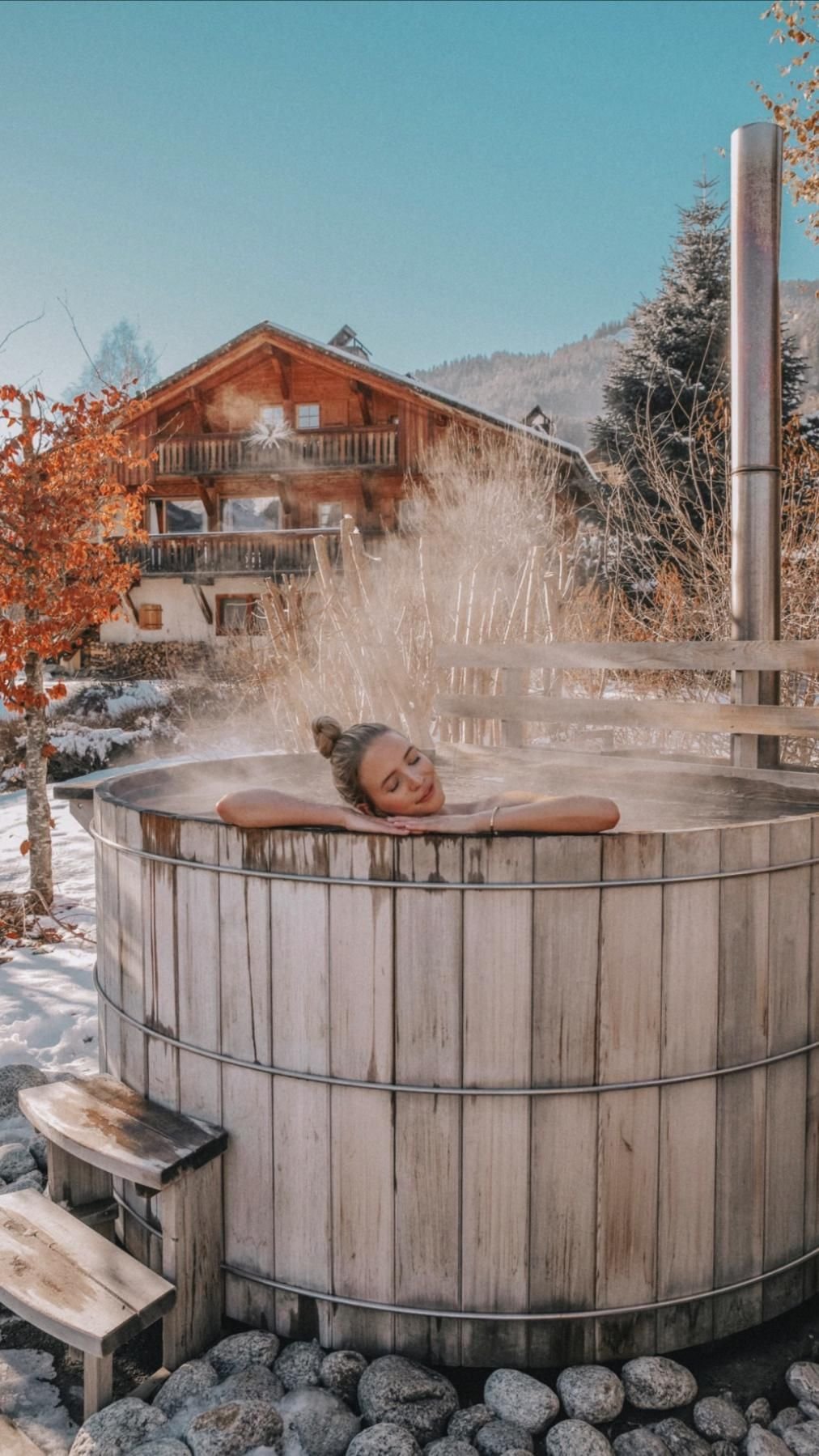
20 Outdoor Jacuzzi Ideas Designed for Recovery, Relaxation, and Daily Wellness
Disclosure : This post may contain affiliate links or paid partnerships. I may earn compensation if you click a link or make a purchase, at no additional cost to you. See my disclosure for more info.
The body keeps score.
Every training session you pushed through, every hour hunched at a desk, every night you didn’t quite recover properly — it accumulates. The tightness in your hips. The knot under your left shoulder blade. The tension that follows you from room to room without being invited.
Heat and water are among the oldest and most effective recovery tools we have. A jacuzzi isn’t a luxury item — it’s a recovery protocol. And when it’s built into the right outdoor setting — with string lights overhead, proper privacy, and a design that invites you in rather than requiring effort to prepare — you actually use it consistently.
Daily use changes everything. A hot tub you step into twice a week is a nice amenity. One you soak in every night before bed, every morning after training, becomes infrastructure for how well you function.
These 20 outdoor jacuzzi ideas are designed with daily use in mind — the settings, features, and surrounding designs that make wellness a habit rather than an occasional treat.
20 Jacuzzi Setups Optimized for Daily Wellness Use
1. Accessible Sunken Tub for Recovery Ritual
A hot tub that requires stepping up and over a high rim creates a small physical barrier — and small barriers accumulate into skipped sessions over time. A flush-set sunken tub eliminates that barrier entirely. You step directly in at deck level.
The functional benefit is real for anyone using hydrotherapy for joint pain, post-workout recovery, or mobility issues. Direct, frictionless access to the water means the ritual begins immediately — no awkward entry, no balance challenge, nothing interrupting the transition from movement to recovery.
Plan equipment access panels into the design from the start — any disruption to a daily recovery practice is worth preventing at the planning stage.
2. Pergola-Shaded Recovery Corner
Extended outdoor wellness sessions — thirty minutes or longer — require protection from direct sun. A pergola provides that shade without enclosing the space or cutting off the sky and fresh air that make outdoor soaking superior to indoor alternatives.
The structure also supports a calm sensory environment. Hang drapes on the sides for privacy and light control. The ability to adjust your exposure — more open for morning sessions, more enclosed for evening wind-down — makes the space serve different recovery contexts across the day.
Cedar or redwood pergolas are the right material choice here: durable, low-maintenance, and naturally beautiful in a way that supports rather than distracts from a wellness-focused setting.
3. Grounding Natural Stone Underfoot
The surface surrounding your hot tub is the first and last thing your body contacts during every session. Material matters for wellness purposes.
Natural stone — travertine, rough slate, warm sandstone — stays cooler underfoot in direct sun than composite or dark tile, and provides a gentle texture that is neither slippery nor abrasive. The tactile quality of natural stone at the hot tub edge is part of the recovery experience — grounding, warm, and genuinely natural in a way that manufactured materials are not.
4. Japanese Therapeutic Soaking Practice
Japanese soaking culture — the ofuro — is built on a specific principle: the soak itself is the practice. Not entertainment, not socializing, not distraction. Just sustained immersion in hot water as a deliberate physical and mental reset.
A cedar soaking tub in a simple gravel garden, enclosed by bamboo fencing on two or three sides, with a single considered plant as the only visual focal point, creates the conditions for that kind of practice.
No distractions. No ambient noise. Just heat, stillness, and the sensation of physical recovery happening in real time.
5. Elevated Platform for Mental Decompression
Elevation provides psychological separation from daily stressors in a way that ground-level spaces simply cannot.
A rooftop or upper-deck installation lifts you physically above the objects and activities that occupy your mental bandwidth at ground level — the garden hoses, the recycling bins, the unfinished projects. What replaces them is sky and space, which is exactly what a decompression space should offer.
Before any planning proceeds: a structural engineer must confirm load capacity. A filled hot tub with occupants regularly exceeds 3,500 pounds. This is a confirmation that must happen before any other planning step.
6. Earth-Integrated Hillside Installation
There is a particular quality of wellness associated with being surrounded by earth rather than structures. Hillside-integrated jacuzzis tap into that quality.
Carved into the grade, framed by retaining walls in stone or timber, with the slope rising naturally behind — the setup has a geological permanence that manufactured structures don’t replicate. The thermal mass of the surrounding soil also insulates the installation, keeping water temperature stable and heating costs lower year-round.
7. Contrast Therapy: Fire and Water Zone
Contrast therapy — alternating between heat and cold or between different temperature environments — is one of the most effective recovery protocols available without specialized equipment.
A fire pit positioned eight to ten feet from the jacuzzi creates the outdoor equivalent of a Finnish sauna setup. Exit the hot water, stand near the fire in the cool air, then return to the water. The physiological and psychological benefits of this cycle are well-documented and immediately felt.
A gas fire pit gives you reliable, instant heat whenever you want it. Wood-burning adds the sensory dimension of smoke and crackling sound.
8. Infinity-Edge Meditation View
Extended soaking sessions benefit from a compelling visual focal point. An infinity-edge jacuzzi facing a view transforms a straightforward soak into something closer to a meditation practice.
The water’s apparent continuation into the landscape gives the eye a resting place that is simultaneously stimulating and calming — the same quality found in ocean views and mountain vistas. If your property has any view at all, an infinity edge is worth serious consideration.
9. Sound-Dampening Living Privacy Wall
Effective wellness spaces are acoustically sheltered as well as visually private. A solid fence reflects sound. A planted screen absorbs it.
vertical garden panels on a wooden frame, filled with trailing plants, ferns, or ornamental grasses, provide a living acoustic buffer around your soaking area. The difference in ambient noise between a fenced yard and a planted one can be several decibels — the difference between conscious awareness of background noise and genuine quiet.
10. Swim Spa for Active Recovery
For athletes and anyone managing an active lifestyle, a swim spa delivers something a standard hot tub cannot: resistance training and aquatic cardio in the same unit.
Swim against the current for cardiovascular and muscular endurance work. Transition to the heated soaking zone for recovery. Both phases of an effective active recovery session happen in one installation with one footprint.
Unlike most pools, swim spas are fully functional in cold weather — which means your training and recovery routine doesn’t have a seasonal gap.
11. Full Sensory Tropical Immersion
Sensory-rich environments support faster mental decompression than neutral ones. A fully realized tropical setup — Tiki torches, lava rock, large-leaf tropical plants, a thatched canopy overhead — engages multiple senses simultaneously.
The visual warmth, the smell of wood-burning torches, the sound of water, the physical heat — all four sensory channels occupied at once means the part of your brain that was running work problems begins to quiet faster than it would in a neutral environment.
An outdoor shower with a rainfall head nearby adds the rinsing ritual that both prepares your skin for soaking and signals physically that the recovery session is beginning.
12. Minimalist Concrete for Visual Calm
Research on environmental psychology consistently shows that visual simplicity reduces cognitive load. A clean concrete surround with Color-changing LED lights running beneath the rim provides exactly that: a visually uncluttered environment that lets the nervous system decompress rather than process.
The downlit LED strip — facing the ground from beneath the rim — creates a soft, floating glow at night that is visually compelling without being stimulating. The right light for recovery.
13. Nature-Immersive Forest Clearing
Research in shinrin-yoku — forest bathing — documents measurable physiological benefits from time spent in dense greenery: lower cortisol levels, reduced heart rate, improved mood. A forest clearing setup brings those benefits to your backyard.
Dense ornamental grasses, multi-stem birches, and columnar arborvitae surrounding the hot tub perimeter create an immersive green environment. The soaking session becomes a forest bathing session. Two wellness practices in one.
14. Tiered Deck With Gradual Decompression Zones
The most effective wellness spaces have clear spatial sequencing: transition zones that allow the nervous system to shift from active to passive mode before you even step into the water.
A tiered deck creates that sequence naturally. seating on the middle tier becomes the transition zone — a place to sit, slow down, and let go of the day before descending to the hot tub on the lowest level. The spatial movement reinforces the psychological shift.
15. Private Courtyard Wellness Space
Wellness requires privacy. Not the illusion of privacy — the genuine ability to be fully unseen and unheard by others.
The interior courtyard of a U- or L-shaped home provides this completely. Three walls, natural wind shelter, and a sky view without any roofline interruption. Add oversized planters to anchor the corners, outdoor curtains for complete enclosure when needed, and candle lanterns for low, warm evening light.
The result is a wellness space with the acoustic and visual privacy of an indoor room with the open-air quality of an outdoor one.
16. Sensory Bohemian Spa Environment
Texture and warmth are underrated elements of restorative environments. Macramé wall hangings on the fence, handmade tile around the tub base, outdoor rugs underfoot, and a wooden bench nearby with warm towels — each adds a layer of sensory richness to the soaking environment.
Multi-sensory spaces support faster and deeper relaxation responses than visually and texturally neutral ones. The bohemian approach delivers exactly the sensory richness that makes a recovery session feel complete rather than perfunctory.
17. Climate-Controlled Gazebo Wellness Room
Consistent daily wellness practice requires consistent access. A hardtop gazebo removes every weather variable that would otherwise interrupt your routine.
Rain in November doesn’t cancel your soak. Wind doesn’t either. Neither does August heat — the roof blocks direct sun and keeps the air under the canopy several degrees cooler than in the open. Your wellness session happens on your schedule, not the weather’s.
18. Pool Spillover as Aquatic Wellness Feature
The sound of moving water has measurable effects on the autonomic nervous system: lower heart rate, reduced perceived stress, faster shift from sympathetic to parasympathetic activity.
A raised spa spilling into the pool below makes that sound a constant feature of your outdoor space — present every time you’re outside, not just when you’re soaking. The ambient acoustic quality of the yard itself becomes part of the wellness environment.
19. Minimalist Gravel-Base Wellness Station
The most consistent wellness practices are the ones with the least friction between intention and execution.
A premium freestanding jacuzzi on a clean gravel pad. One carefully chosen plant. A towel hook within reach. Nothing else competing for your attention.
No decision fatigue. No clutter to manage. Just the recovery tool itself, ready to use. Simplicity serves consistency, and consistency is what makes a wellness practice genuinely transformative.
20. App-Managed Smart Wellness System
The most effective wellness tools are the ones you use daily. Reducing friction is how daily use happens.
An app-connected hot tub lets you schedule temperature, jets, and lighting automatically. Your recovery session is ready when you step outside — no preparation required, no waiting. Schedule the morning temperature for 5:45 AM. Set the evening cycle to begin forty minutes before your typical end time.
The tub becomes part of the rhythm of your day rather than an exception to it. That shift — from occasional use to daily ritual — is where all the real benefits are found.
Planning Essentials for a Wellness Setup That Lasts
A wellness space that requires constant repairs or management becomes a source of stress rather than a relief from it. Avoid these four planning failures:
Drainage is a health issue, not just an aesthetic one. Standing water around a hot tub grows mold and bacteria. Proper drainage slope and channels are non-negotiable for any outdoor wellness space.
Equipment access prevents interruption. A pump failure that requires demolition to reach disrupts a wellness routine far longer than it should. Build access panels into every installation from the start.
Electrical safety is physical safety. Hot tubs near water require dedicated 220–240V GFCI circuits installed by licensed electricians with specific experience. There is no acceptable shortcut here.
Foundation failure creates long-term instability. A loaded hot tub can weigh over 4,000 pounds. Engineered concrete, rated compacted gravel, or a structurally designed deck is required. Grass and unstabilized soil are not options.
Build this correctly and your wellness practice has a durable home. Build it carelessly and you’ll spend the next several years managing the consequences instead of enjoying the benefits.
Your Wellness Practice Starts Outside
Twenty ideas. Each one a different version of the same core proposition: daily access to heat, water, and outdoor air, in a setting that makes you actually want to use it.
You don’t need all twenty. You need the one that fits your body, your schedule, and how you want to end each day.
Which one felt right when you saw it?
Build that one. Use it every day. Let it change how you feel.
Your backyard is waiting to become part of how well you take care of yourself.