
The Complete Kitchen Lighting Playbook: 29 Ideas Organized by Layer and Zone
Disclosure : This post may contain affiliate links or paid partnerships. I may earn compensation if you click a link or make a purchase, at no additional cost to you. See my disclosure for more info.
Some kitchens feel effortlessly comfortable the moment you step into them. Others feel flat or incomplete despite looking fine on paper.
The answer is almost always the lighting — not whether the fixtures are beautiful, but whether they are doing the right jobs in the right places.
Kitchen lighting is a system with three components: ambient for room coverage, task for functional surfaces, and accent for depth and atmosphere. All three are required. This guide covers all 29 ideas that fill each layer completely.
Why Three Layers of Light Are Required, Not Optional
A single overhead light does one thing: it illuminates the general space. That is not enough for a kitchen that needs to cook in, eat in, and feel genuinely welcoming.
Cooking surfaces need direct, shadow-free task light. Social zones need warm adjustable atmosphere. Display features need defining accent light. No single fixture covers all three needs. The layered approach is not a design preference. It is the only architecture that addresses everything a kitchen requires.
Layer One: Ambient Lighting — The Room-Level Foundation
Ambient light is the room’s baseline. It must be warm, even, dimmable, and capable of filling the entire space without harsh contrasts or strong shadows.
1. Recessed ceiling lights with dimmer control
Recessed fixtures spread light evenly, do not compete visually with other fixtures, and perform exceptionally well with a dimmer switch. The dimmer converts a static ambient layer into one that adapts to every use scenario the kitchen encounters throughout the day.
2. Flush mount with frosted glass diffusion
A flush mount with a frosted diffuser provides acceptable ambient coverage without recessed infrastructure. The frosted surface scatters incoming light broadly, eliminating hot spots and the glare issues that accompany clear glass alternatives.
3. Semi-flush with a fabric diffuser
A semi-flush mount with a linen or fabric shade produces softer, more directional ambient light that shifts the kitchen atmosphere toward the warm and residential. Appropriate when comfort is prioritized over clinical brightness.
4. Slim LED panels for lower ceilings
Slim LED panels mount flush with the ceiling surface, deliver high-output even light, and preserve the full vertical space of the room. The correct solution wherever ceiling height is a constraint.
5. Perimeter cove lighting
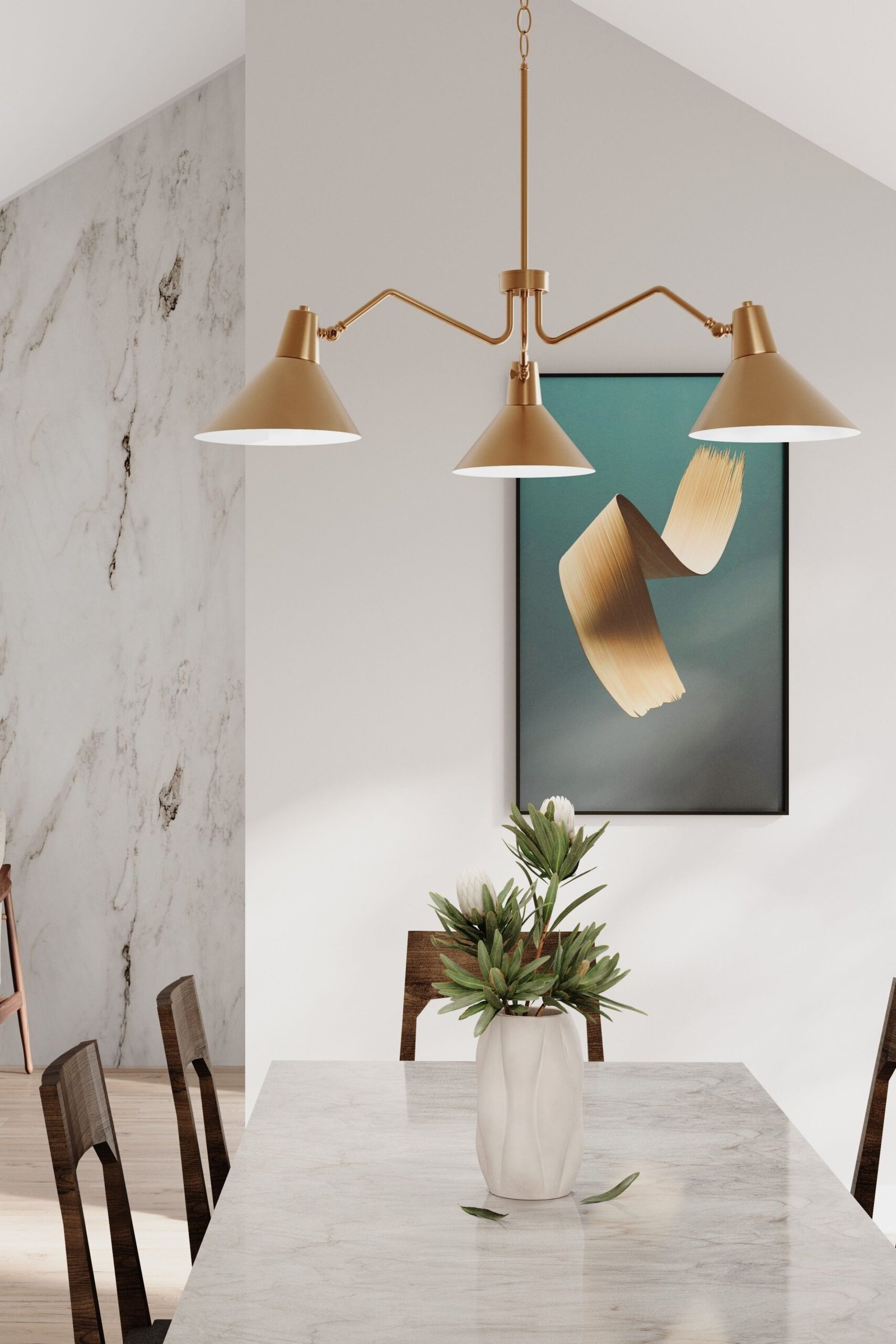
LED strip lights in a ceiling cove channel create indirect uplight that reflects off the ceiling, filling the room with diffused shadow-free ambient glow. This technique adds perceived height and a richness of ambient light that no direct-source fixture can replicate.
Layer Two: Task Lighting — Precision for Every Functional Surface
Task lighting targets specific work surfaces with direct, quality light. The correct amount of light, positioned correctly, at exactly the surface where work happens.
6. Under-cabinet LED strip lights
The highest-impact kitchen lighting upgrade per dollar spent. Under-cabinet strips deliver direct light onto countertops, eliminate the shadow problem created by overhead fixtures, and illuminate backsplash materials from a close-range angle that makes them appear at their best. Adhesive kits need no electrician.
7. Under-cabinet puck lights
Puck lights provide discrete focal illumination rather than continuous coverage. Use when the goal is to highlight specific counter areas or when a more deliberate, spot-lit effect is preferred.
8. Island pendant lights
Island pendants serve both the task layer (direct light on the surface) and the accent layer (visual zone definition overhead). Two or three at 30 to 36 inches above the counter accomplish both functions from a single installation.
9. Linear pendant over the full island
A single linear suspension fixture spanning the island length delivers uniform coverage end to end with a cleaner visual line. The more architectural choice for contemporary and minimalist kitchens.
10. Directional track lighting
Modern track systems provide the ability to direct multiple light sources from a single ceiling mount, with each head independently adjustable. For kitchens with irregular layouts or multiple distinct work zones, no other ceiling fixture offers equivalent flexibility.
11. Swing-arm sconce near the range
A swing-arm sconce wall-mounted near the cooktop provides close-range adjustable task light at the cooking surface — a gap that neither overhead fixtures nor range hood lights address adequately.
12. High-output bulbs in the range hood
The built-in light in a range hood is an underused task resource. Replacing factory bulbs with warm, high-lumen LEDs converts the hood into an effective stovetop task light. Installation: under five minutes.
Layer Three: Accent Lighting — Depth, Atmosphere, and Definition
Accent lighting does not illuminate the room or light a work surface. It gives the kitchen visual depth, highlights its best features, and creates the warmth that makes the space genuinely pleasant. Without it, a kitchen is functional. With it, it is beautiful.
13. Interior cabinet lighting for glass-front doors
Glass-front doors exist to display what is inside. Without interior lighting, the display function is unavailable after dark. LED puck lights or strips inside complete what the glass door promises — a visible, lit display that contributes to the kitchen’s visual richness at all hours.
14. Above-cabinet uplight
The gap above upper cabinets that does not reach the ceiling is an opportunity. LED strips on top of the cabinets aimed at the ceiling create a warm indirect wash that adds height, fills the upper zone with light, and contributes ambient richness that ceiling fixtures cannot deliver from above.
15. Toe-kick accent lighting
LED strips in the toe-kick channel create a floating effect at floor level that adds depth to the kitchen at night. A useful low-level ambient layer that makes the room feel finished and considered.
16. Under-shelf lighting for open shelving
Open shelves function as displays only when they are lit. LED strips along the underside of each shelf maintain the visual presence of displayed objects regardless of ambient light conditions — otherwise, the display only works in daylight.
17. Illuminated translucent kickboard panels
In contemporary kitchens, illuminated panels at the cabinet base replace standard opaque toe-kick boards with a glowing surface that emits even light at floor level. The technique is architecturally bold and reads as intentional rather than merely decorative.
18. Auto-triggered interior drawer lighting
Motion-activated LED strips inside deep drawers serve both a practical purpose — visible contents immediately — and an experiential one. Wireless, battery-powered, and installed in minutes.
Statement Fixtures: Single Choices That Define the Kitchen’s Identity
Beyond the three layers, individual statement fixtures communicate the kitchen’s personality and aesthetic direction. These are design decisions that happen to produce light.
19. One large architecturally significant pendant
A single oversized pendant — in sculptural woven rattan, hand-blown glass, or precise geometric metal — establishes a visual anchor that every other element in the room orients around.
20. A chandelier in the dining zone
A chandelier scaled to the kitchen dining area elevates the zone from utilitarian to genuinely elegant. The kitchen becomes a room people are drawn toward rather than simply directed to.
21. Lantern-style pendants
Lantern pendants distribute light broadly through open cage frames while contributing historical architectural quality. Their cross-style compatibility makes them among the most universally applicable statement fixtures available.
22. A pendant cluster composition
A cluster of small pendants at varied heights creates an overhead composition that reads as artistic and intentional rather than simply installed.
Technology Additions: Smart and Specialty Lighting
Smart lighting is now mature and broadly accessible. These four options represent the category’s most genuinely useful applications in a kitchen context.
23. Tunable color temperature smart bulbs
Smart bulbs with adjustable color temperature allow a single fixture to serve different purposes at different times of day. Standard socket. No rewiring. Immediate benefit from the first evening of use.
24. Motion-activated cabinet interior lights
Wireless battery-powered lights that take five minutes to install and activate automatically when cabinet or pantry doors open. Low effort, daily utility, consistently appreciated.
25. LED-integrated cabinet hardware
Cabinet pulls with built-in LED illumination produce a continuous subtle glow along cabinet fronts. A specialist detail for contemporary kitchens that communicates deliberate design intent.
26. Solar tube daylighting
For kitchens with insufficient natural light, a solar tube — a reflective conduit from roof surface to ceiling diffuser — delivers genuine full-spectrum daylight without structural renovation. Nothing artificial fully replicates what natural light does for a kitchen interior.
Technical Specification: Color Temperature and Placement
These technical parameters determine whether the system performs as designed. They are not optional refinements. They are foundational requirements.
27. Specify 2700K to 3000K for all sources
Lamps above 4000K produce blue-white light that renders surfaces harshly and creates an uncomfortable clinical environment.
The 2700K to 3000K range is the residential kitchen standard. It renders warm materials warmly, flatters food and people equally, and creates an environment that supports both productivity and relaxation. For task-specific areas, 3500K is the acceptable upper limit.
28. Uniform color temperature, dimmer-controlled brightness
Multiple color temperature sources in a single room compromise the scheme’s coherence. The brain registers the inconsistency as discomfort without identifying its source.
Specify identical color temperature across every fixture. Deploy dimmer controls for intensity variation. Color temperature is the constant. Brightness is the variable.
29. Position task lights between the user and the work surface
Task lighting positioned behind the user casts their shadow onto the surface they are working on — the opposite of the intended function.
Under-cabinet strips at the front edge of the cabinet base place the light source between the user’s position and the counter below. Shadows fall behind. The surface receives full direct illumination. This is the technically correct configuration.
The Planning Error That Reduces Every Upgrade’s Effectiveness
One systematic error reduces the effectiveness of kitchen lighting investments regardless of budget.
Selecting fixtures before defining the lighting brief.
A fixture selected for visual appeal and hung in an available location is not a plan. It may or may not address any actual lighting deficiency. Usually it does not.
The correct sequence: audit the three layers, identify which are absent or inadequate, define the specific coverage gaps, then select fixtures that address those gaps precisely. Function first. Aesthetics follow from function fulfilled correctly.
What a Properly Layered Lighting System Delivers
When all three layers are present and correctly specified, a kitchen undergoes a fundamental change. Not just in appearance, but in how it feels to use.
Cooking becomes clearer and safer. Atmosphere adjusts naturally across activities. The room’s best features are consistently visible. The space becomes genuinely pleasant at any hour.
Begin with the layer most visibly absent. Add each subsequent layer methodically. The result is a kitchen that finally matches everything else you have invested in it.