
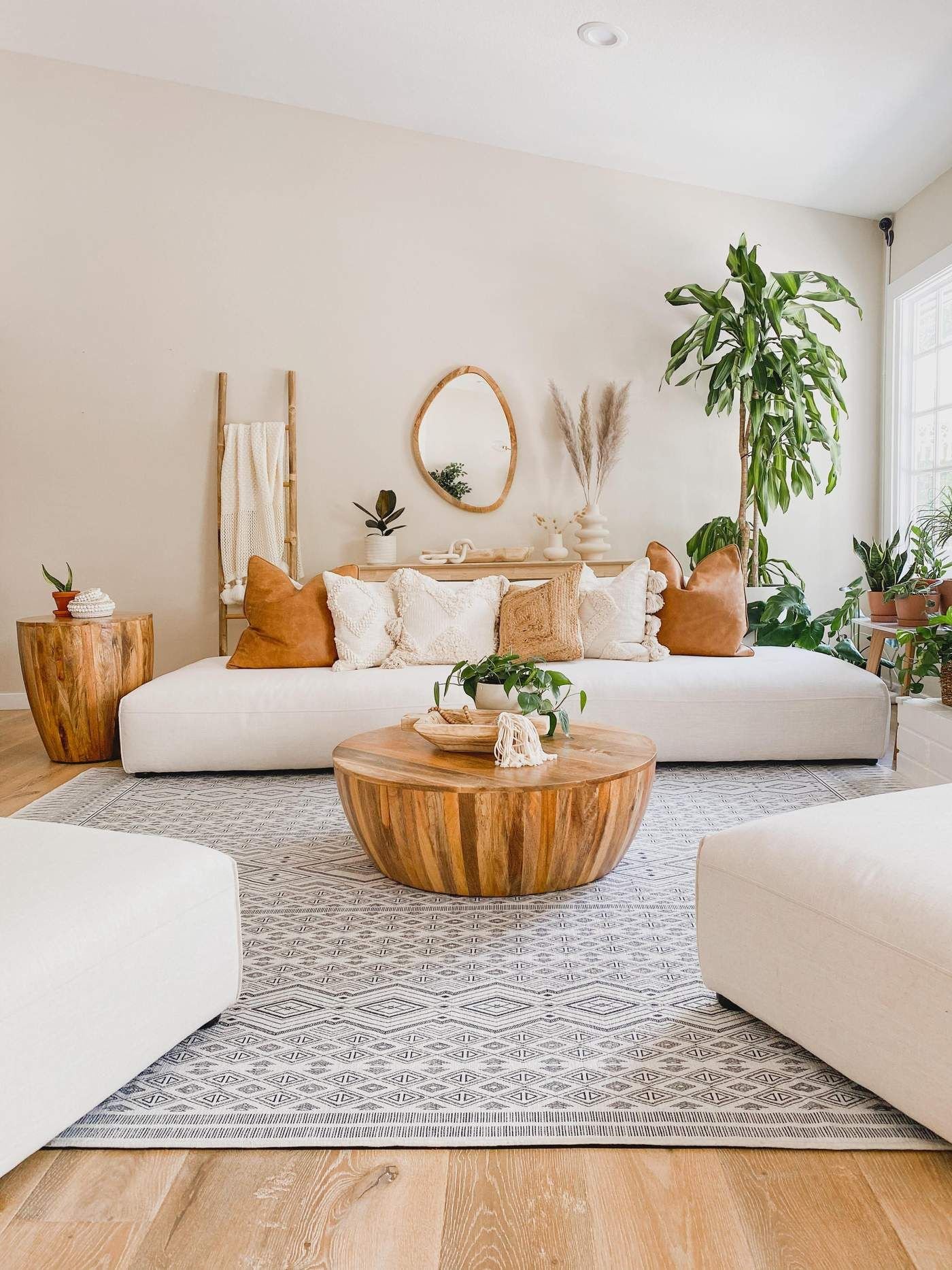
33+ Coffee Table Ideas for a Better Living Room
Disclosure : This post may contain affiliate links or paid partnerships. I may earn compensation if you click a link or make a purchase, at no additional cost to you. See my disclosure for more info.
Your living room is not working as well as it could.
You sense it every time you walk in. Something is off. The room does not feel settled.
Usually, the problem is the coffee table.
It sits at the visual center of the space. It is the anchor around which the furniture arranges itself. When it is wrong—wrong size, wrong style, wrong proportion—the entire room reads as unfinished.
When it is right, the room works.
This guide covers more than 33 options organized by category, with sizing and styling guidance included. Use it to find the one that fits.
Simple, Timeless Choices
These are the dependable options. They have worked across decades because the underlying design decisions are correct, not fashionable.
1. Solid wood rectangular table. Hardwood in walnut, oak, or teak. Clean lines. No ornamentation. Works in any room and with any sofa. Reliable, durable, appropriate.
2. Round marble-top table. Natural stone on a metal base. The curved profile breaks up rectilinear rooms. The material adds visual weight without bulk.
3. Mid-century modern table. Tapered legs, reduced mass, clean geometry. Developed in the 1950s because the proportions were genuinely correct. Still in production for the same reason.
4. Oval tulip-base table. Single pedestal. Rounded form. No legs to obstruct movement. Pairs well with curved sectionals and low sofas.
5. Parsons-style coffee table. Uniform construction throughout. Minimal silhouette. Available in wood, lacquer, or upholstered finishes. Adapts to most interiors without effort.
6. Traditional turned-leg table. For rooms with a classic sensibility. Warm wood tones, turned legs, and a well-chosen stain integrate naturally with heritage furnishings and soft textiles.
Tables Worth Noticing
Some rooms benefit from a stronger central statement. These tables provide one.
Each has a clear visual identity. Choose one that matches the character of the room.
7. Live-edge wood slab table. The natural edge of the wood is preserved. No two pieces are the same. The organic quality is unlike anything produced industrially.
8. Hammered brass drum table. Hammered brass cylinder. Distributes light evenly. Adds warmth to neutral rooms without competing for attention.
9. Black concrete table. Dense, low, and deliberate. The correct choice for rooms that want industrial weight and presence.
10. Sculptural travertine table. Natural stone. Irregular soft forms. Each piece is unique. These read as sculpture as much as furniture.
11. Bold lacquered color table. High-gloss finish in a strong color. One piece in a confident color can carry an entire room’s design intention.
12. Vintage steamer trunk. Authentic history, considerable character, and hidden storage. A singular choice that functions on every level.
Storage-Focused Options
A flat surface is the minimum a coffee table can offer. The following options offer considerably more.
13. Lift-top coffee table. Surface raises to desk height. Hidden storage compartment underneath. The practical choice for anyone who works or eats from the sofa.
14. Coffee table with drawers. Dedicated drawer storage for small items. Eliminates tabletop clutter without requiring any additional furniture.
15. Open-shelf coffee table. Lower shelf for books, baskets, or plants. Primary surface stays clear. Secondary space is actively used.
16. Basket coffee table. Large woven basket with a load-bearing lid. Blankets and extras inside. The exterior presents as textured, intentional decor.
17. Ottoman with a tray on top. Soft surface underfoot. Storage inside. Removable tray on top. Three functions consolidated into one piece.
18. Apothecary-style table with small drawers. Multiple small drawers for granular organization. The visual grid adds structural interest at the same time.
Solutions for Tight Spaces
Smaller rooms require more precise choices. These options provide full function without unnecessary footprint.
19. Nesting tables. Multiple tables that consolidate for storage and expand for use. The most flexible option for rooms with variable needs.
20. Narrow oval coffee table. Elongated oval. Generous surface area. No protruding corners. Keeps foot traffic flowing naturally.
21. Acrylic or lucite table. Near-transparent. Minimal visual weight. The room appears larger. Function without visual displacement.
22. C-shaped slide-under table. Slides beneath the sofa arm. No floor footprint. Maximum surface availability in minimum space.
23. A slim console used as a coffee table. Shallow depth, extended length, full surface availability. Works well in rooms where a standard table would be too bulky.
Materials That Add Interest
These materials go beyond the standard wood-and-glass range. Each one carries something that conventional options do not.
24. Petrified wood. Fossilized wood millions of years old. Structurally stable. Visually unlike anything manufactured. The surface invites touch.
25. Terrazzo. Stone chip aggregate in a poured surface. Quiet visual complexity. No two pieces identical. Heritage material with contemporary applications.
26. Rattan or woven cane. Open weave. Lightweight. Textured. Reads as coastal, Nordic, or bohemian depending on context. Genuinely versatile.
27. Smoked glass with blackened steel. Tinted glass and dark metal. Precise, contemporary, editorial. Suits minimal and monochromatic interiors well.
28. Hand-poured resin. Cast to mimic stone, water movement, or abstract form. Each piece is unique. Functional and visually original.
29. Ceramic or hand-plastered. Organic rounded forms. Matte natural finishes. The visible marks of hand production add character that manufacturing cannot replicate.
Smarter Arrangements
These configurations challenge the conventional single-rectangle-in-the-center setup. Each one offers something the standard approach does not.
30. Two matching side tables pushed together. Combined: one cohesive surface. Separated: two independent, mobile pieces. Flexible by design.
31. A cluster of three small stools. Coffee table configuration when grouped. Extra seating when dispersed. One set of objects serving two different needs.
32. A thick butcher block slab on hairpin legs. DIY build. Exact dimensions to your space. Costs less than almost any retail equivalent.
33. A garden stool as a mini coffee table. Ceramic garden stools are durable, affordable, and available in a wide range of finishes. Practical in small seating configurations.
Styling Basics That Work
A coffee table is not finished when it is placed in the room. It is finished when it is styled. These are the principles that make styling work.
Use a tray to define the surface. A decorative tray creates a visual boundary. Inside: curated. Outside: clutter. The distinction is immediate and meaningful.
Group in threes. Three objects at different heights. Always more interesting than two or four. A candle, a plant, a stack of books covers it.
Include organic material. A vase with a stem, a small plant, dried botanicals. Something living or natural makes a flat surface feel inhabited.
Build height with books. Two horizontal books as a base. A small object on top. Instant vertical variation.
Leave space empty. Negative space gives the arrangement room to register. Do not fill every available inch.
The Rules of Sizing
Proportional errors are the most common coffee table problem. These four rules address them directly.
Height. Align with sofa cushion height or sit one to two inches below. Never higher.
Length. Two-thirds the sofa length. Too long overwhelms. Too short disconnects.
Clearance. 14 to 18 inches between table edge and sofa. Sufficient for movement and reach.
Shape. Sectionals pair with round or square. Linear sofas pair with rectangular or oval.
Additional note: coffee and side tables do not need to match. Intentional material mixing—wood and metal, stone and glass—adds depth and visual interest. A matching set often reads as a catalogue page, not a designed room.
Budget Reality Check
Price does not determine whether a coffee table looks good in your room. Fit does.
A correctly proportioned, well-styled table at any price point will outperform an expensive one with the wrong dimensions or the wrong style. This is consistent and reliable.
Focus on: the right height and scale, a material that suits how you live, a shape that works with your furniture, a style that is coherent with the room. When those variables are correct, price becomes a secondary consideration.
Make the Change
You have the options. You have the rules. You have what you need to make a good decision.
The next step is to actually make it.
Pick the table that fits the space. Order it. Style it properly. Experience the difference a well-chosen coffee table makes.
The room you want is one decision away.