
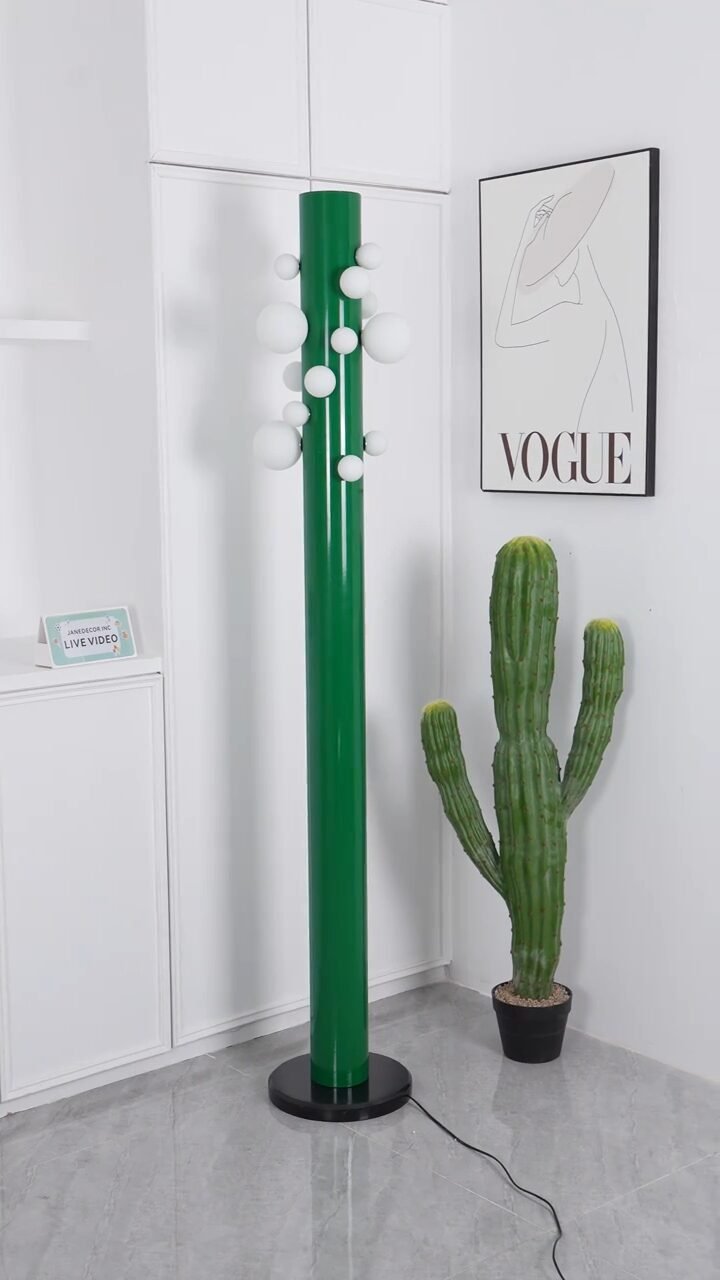
How One Floor Lamp Transformed My Most Problematic Corner (And 07 Styles That Can Do the Same for Yours)
Disclosure : This post may contain affiliate links or paid partnerships. I may earn compensation if you click a link or make a purchase, at no additional cost to you. See my disclosure for more info.
I spent two years ignoring a corner in my living room.
It wasn’t that the room was bad. The furniture was fine. The throw pillows were nice. But every time I sat on the couch, my eyes drifted to that empty corner — and something felt off.
I tried plants. I tried a floor basket. I tried pretending it was fine.
It wasn’t fine.
What fixed it was embarrassingly simple: a floor lamp. One piece. The right one for that specific corner. And the moment I placed it, the room settled into itself in a way it hadn’t in two years.
If your room has the same problem, here’s everything you need to know to solve it — including the seven floor lamp styles that work best for empty corners, and how to figure out which one is right for yours.
Why That Empty Corner Bothers You So Much
It’s not just aesthetics. It’s how rooms actually work.
You probably put thought into the major decisions. You chose a rug you liked. You positioned the furniture until the proportions felt right. You may have even repainted.
But corners are easy to forget. They’re not the first thing you see when you walk in. They’re not the obvious focal point. They’re just… there, at the edge of everything.
Here’s what I learned after fixing my own: corners set the tone for the entire room. Interior stylists know this intimately. A bare corner creates a kind of visual restlessness — the eye reaches the edge of the room, finds nothing resolved there, and comes back unsatisfied.
That nagging feeling every time you’re in the space? That’s your brain telling you the composition isn’t finished.
A floor lamp finishes it. It adds height, warmth, and the kind of intentionality that tells your eye: this room is complete, all the way to its corners.
The Mistake I Almost Made (And You Should Avoid)
I almost bought a lamp that would have made things worse.
I found it on a design blog. It looked incredible in the photo — sleek, modern, all brushed chrome and sharp angles. Exactly the kind of thing that makes you click Add to Cart before thinking too hard.
Then I paused. My room is warm. The furniture is wooden. The color palette runs to terracotta and sage. That chrome lamp would have walked into my living room like a stranger at the wrong party.
Context is everything with floor lamps. A beautiful lamp in the wrong room is still a mistake. The lamp has to fit the energy of the space it’s entering, not just look good in isolation.
And scale matters just as much. A too-small lamp beside a large sectional looks like an afterthought. A too-large lamp beside a small reading chair looks aggressive. The lamp has to match the corner’s proportions.
Keep that in mind as you read through the styles below. Every one of them is excellent. But each one is excellent only in the right setting.
1. The Arc Floor Lamp: Drama That Earns Its Place
The first time I saw an arc floor lamp in person — actually in someone’s home, not in a photo — I understood immediately why designers love them.
The curved arm sweeps out from the base and delivers light from above, like a chandelier that doesn’t need a ceiling to hang from. It creates a defined zone of light beneath the arc that feels intimate and enveloping without closing off the space.
Arc lamps work brilliantly in corners behind sofas. The arc stretches over the seating area, turning the couch into a destination rather than just furniture.
The rule I’d follow: make sure the arc extends over something intentional. A sofa arm. A side table. A reading chair. An arc hovering over nothing but floor is a lamp in search of a purpose.
Practical note: check the base weight before buying. Arc lamps need a substantial base to stay upright, especially in homes with children or pets.
2. The Tripod Floor Lamp: The Most Versatile Style in the Category
A tripod lamp is the style I’d recommend to most people who ask me where to start.
It’s versatile in a way that’s genuinely rare. Wood legs feel at home in bohemian, Scandinavian, or organic interiors. Metal legs work in industrial, contemporary, and urban spaces. And in both cases, the lamp reads as intentional rather than just decorative.
What I appreciate most about tripod lamps is their independence. They don’t need a side table beside them or accessories around them to look complete. They stand on their own, visually and literally.
Placement tip: put one leg toward the wall and two toward the room. It gives the lamp a more grounded visual stance and prevents that slightly awkward look of all three legs pointing the same direction against a baseboard.
3. The Torchiere: The Corner Lamp for Dim Rooms
If your room always feels darker than it should despite your best efforts, a torchiere is the most transformative tool in this list.
The logic is elegant: instead of directing light downward (where it illuminates one patch of floor), a torchiere sends light upward and lets the ceiling distribute it back into the room as soft, even ambient illumination. The whole room brightens, not just the corner where the lamp sits.
For rooms without overhead fixtures, this is genuinely life-changing. For rooms with ceilings that feel lower than you’d like, the upward-cast light creates a sense of height and openness that’s hard to achieve any other way.
Look for models with dimmable LED settings — the ability to control ambient brightness across the room from one lamp is more useful than it sounds.
Important caveat: the ceiling color matters. Light-colored ceilings reflect the light back beautifully. Dark ceilings absorb it. Know your ceiling before committing to a torchiere.
4. The Pharmacy Floor Lamp: The Honest Choice for Reading Corners
I have a soft spot for pharmacy lamps, and it’s not just aesthetic.
A pharmacy lamp with its articulating arm and adjustable shade is the most honest floor lamp style there is. It does exactly what it looks like it does: delivers precise, directional light exactly where you point it, without making any pretense of being decorative.
Originally designed for clinical environments — hence the name — it was adopted by home designers for reading corners, studies, and any space where focused light matters more than atmospheric glow.
If your empty corner sits beside a chair where you read, sketch, or work, a pharmacy lamp is the most truthful choice. It’s slim, purposeful, and looks so intentional that it makes the corner feel like it was designed specifically around that use.
Give it something to illuminate — a side table, an open book, a project in progress — and the lamp and the activity reinforce each other perfectly.
5. The Statement Sculptural Lamp: Art That Also Lights Up
I’ll be honest: this style is the hardest to get right, and also the most rewarding when you do.
Sculptural floor lamps are pieces where the form is the point — unusual shapes, unexpected materials, silhouettes that work as visual art independent of whether they’re switched on or off.
They don’t produce the best light. That’s not why you buy them. You buy them because the corner needs something that stops people mid-sentence and makes them ask where it came from.
The discipline required: sculptural lamps require neutrality in everything surrounding them. Choose one bold quality — the form, the material, the color — and keep the rest understated. Multiple bold choices in one lamp compete with each other rather than composing into something coherent.
When it works, it really works. When it’s overdone, the corner looks like a curio cabinet exploded.
6. The Shelf Floor Lamp: Two Wins, One Footprint
For a while I kept putting off adding a lamp to my corner because I didn’t know what else to do with that space. I didn’t want to crowd it, but a bare lamp felt insufficient.
A shelf floor lamp solves that problem elegantly. The lamp’s vertical column incorporates built-in shelves, giving you display space alongside your light source without claiming additional floor space.
A few books on one shelf. A small succulent on another. A photo in a simple frame. The corner becomes a layered composition with depth and personality.
The one styling rule I’d insist on: leave at least one shelf empty. A fully loaded shelf lamp looks like a cluttered bookcase. A selectively curated one looks like a design decision. The restraint is visible from across the room.
7. The Rattan or Woven Floor Lamp: When Atmosphere Matters Most
The lamp I eventually chose for my own corner was a rattan one. And I haven’t questioned it for a single day since.
In a room built on natural materials — wood furniture, linen upholstery, terracotta and sage — a rattan lamp doesn’t stand out. It belongs. And when it’s lit, the woven shade casts the warmest, most textured light across the walls — organic and soft in a way that’s genuinely difficult to describe but immediately felt.
It’s not a task lamp. It doesn’t produce bright, focused light. It produces atmosphere, and in a living room, that’s often more valuable.
I paired mine with a floor cushion and a low basket beside it. The corner became the most relaxed spot in the house.
How to Decide Which Style Is Right for Your Corner
Before you click on anything, ask yourself four questions:
What does the corner need functionally? Task light for reading? Ambient warmth? Visual presence alone? Your answer rules out most of the category immediately.
What is the ceiling height? High ceilings open the door to arc lamps and torchieres. Standard or lower ceilings work better with pharmacy lamps and moderate tripods.
What materials and tones dominate the room? Your lamp should feel like it emerged from the same design sensibility as your existing furniture — or like a deliberate, confident departure from it. Accidental contrast is not the same as intentional contrast.
How much floor space does the corner offer? Measure before you buy. Arc lamps and tripods need clearance. Shelf lamps and pharmacy lamps work in tighter footprints.
Answer those four honestly and the right style usually becomes obvious.
The Layering Technique That Took My Room From Good to Great
Adding the floor lamp was step one. What completed the transformation was pairing it with other light sources at different heights.
A table lamp on the console across the room. A few candles on the coffee table. The floor lamp high, the table lamp mid, the candles low.
The difference was significant. The floor lamp alone looked like a solution. The floor lamp alongside other light sources looked like an interior.
Layered light at different heights creates visual depth that a single source can’t replicate. It’s the technique designers use constantly, and it costs nothing beyond what you may already have around the house.
Your corner lamp is the anchor. Let it anchor a larger lighting scheme and the whole room benefits.
Go Fix That Corner
Two years. That’s how long I ignored the problem before a single lamp fixed it in an afternoon.
You don’t need a renovation. You don’t need a designer. You need one well-chosen floor lamp — the right style, the right scale, the right material for your specific corner.
Find it. Measure your space. Place it.
And then sit down on your couch and notice how the room feels different.
Because the right floor lamp doesn’t just occupy a corner.
It completes the room it lives in.
Go light that corner up.