
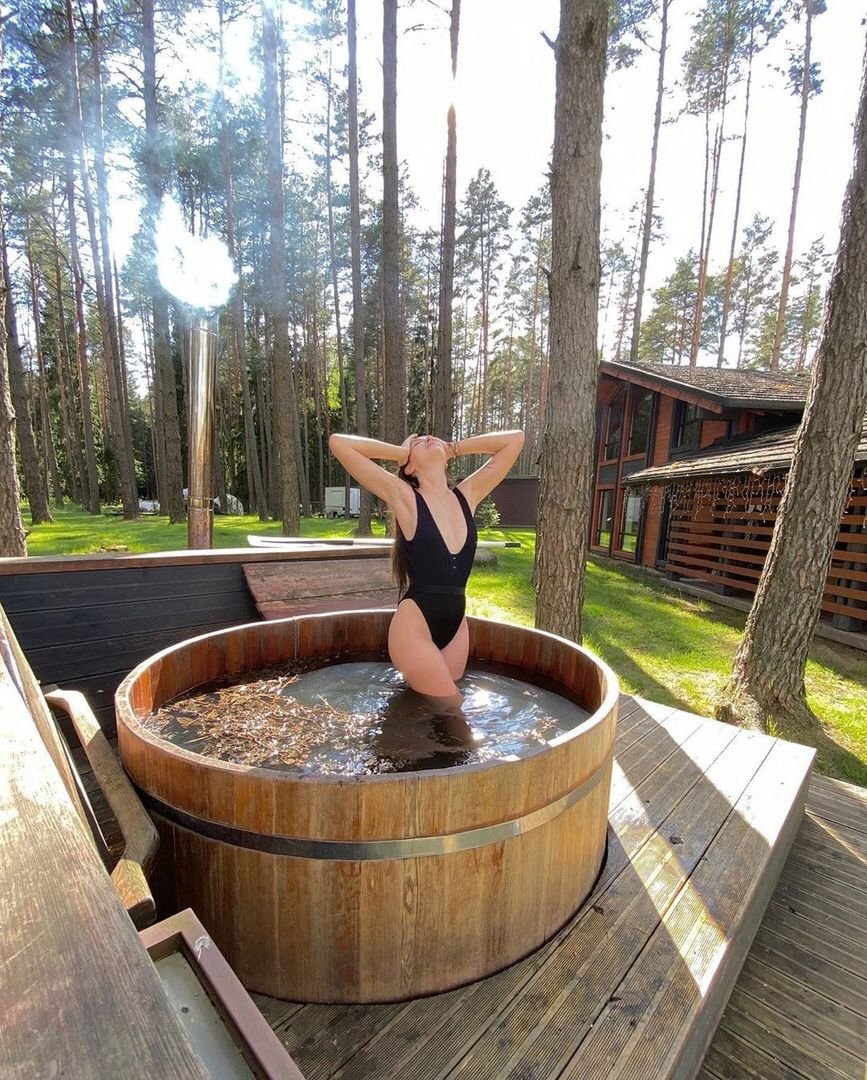
Outdoor Jacuzzi Ideas That Will Make Your Backyard Worth Coming Home To
Disclosure : This post may contain affiliate links or paid partnerships. I may earn compensation if you click a link or make a purchase, at no additional cost to you. See my disclosure for more info.
Your backyard is an asset you’re not using.
The square footage is there. The potential is there. What’s missing is a reason to be outside.
An outdoor jacuzzi fixes that. It’s not just a luxury purchase — it’s the thing that converts dead outdoor space into somewhere you actively choose to spend your time.
Below are nine specific approaches, each with clear design logic, practical considerations, and the kind of details that separate a backyard that looks good in photos from one that actually functions well in daily life.
Outdoor seating and string lights support every setup here. Start there if you’re building from scratch.
Why Most Backyards Stay Unused
People don’t avoid their backyards because they dislike being outside. They avoid them because there’s nothing pulling them there.
No destination. No purpose. Nothing that makes the yard feel different from a slightly inconvenient extension of the living room floor.
A jacuzzi changes the equation. It gives the outdoor space a function that can’t be replicated indoors. And once that function exists, everything else — the furniture, the plants, the lighting — builds around it logically.
Here’s how to build that anchor effectively.
1. The Sunken Jacuzzi That Looks Like It Belongs in a Resort
A standard hot tub sits on top of your yard or deck. A sunken jacuzzi sits within it.
The installation difference is significant. The visual difference is enormous.
When the tub is recessed into the surrounding surface, sightlines remain unbroken. The water becomes part of the landscape rather than something placed on top of it.
You enter the water by stepping down, which is both more comfortable and more naturally luxurious than hoisting yourself over a raised edge.
Budget considerations: excavation, drainage infrastructure, and structural reinforcement add to the initial cost. In return, you get a finished result that consistently reads as high-end regardless of the actual project spend. Pair it with natural stone surrounds and recessed lighting along the edges for maximum effect.
2. The Pergola-Covered Jacuzzi for Year-Round Luxury
An outdoor jacuzzi without overhead shelter is seasonal by default. Rain and excessive sun both limit viable usage hours considerably.
A pergola is the most practical and aesthetically coherent solution. It provides shade, deflects rain, and with retractable curtains or an adjustable louvered roof, extends comfortable usage into seasons that would otherwise be off-limits.
Design the pergola and jacuzzi as a unified system. Mismatched materials between the tub surround and the overhead structure create a disjointed result. Consistent palette and material throughout creates cohesion. Add pendant lighting from the overhead beams and the space functions as an outdoor room rather than an outdoor appliance.
3. The Japanese-Inspired Soaking Tub Setup
If a standard hot tub’s size and aesthetic don’t match your space or taste, the ofuro-style soaking tub is a serious alternative.
Narrower and deeper than conventional hot tubs, these are designed for solitary or two-person immersion focused on heat and quiet rather than jet massage and socialization. The experience is genuinely different.
Landscape integration is straightforward because the format is compact. A cedar soaking tub with planter boxes arranged at strategic angles, some smooth river stones, and a bamboo screen behind it creates a complete and polished setup in a small footprint.
For yards where a full hot tub would feel oversized, this delivers equivalent therapeutic value in a fraction of the space.
4. The Deck-Integrated Jacuzzi That Maximizes Space
The most space-efficient jacuzzi installation isn’t the smallest tub — it’s the one that’s properly integrated into the deck structure.
A hot tub placed on a deck takes up floor space and creates circulation problems. A hot tub built into the deck becomes part of the floor plan. The deck accommodates it; nothing competes with it.
Surrounding deck space becomes functional rather than leftover. Built-in bench seating, planter boxes, and a narrow ledge at water level for drinks complete the setup cleanly.
Multi-level decks amplify the spatial efficiency: the jacuzzi occupies a lower level, seating sits above, and the yard gains vertical interest that makes the space read as larger than its actual dimensions.
5. The Fire-and-Water Combo That Stops People in Their Tracks
The fire-and-water pairing in outdoor design works because the sensory contrast is immediately compelling. Heat from two different sources, movement from two different forms, glow from fire reflecting off water.
Practically: a propane fire pit or gas fire table near the jacuzzi creates this effect reliably and without the maintenance overhead of wood-burning fire.
Position the fire element close enough to be felt from the water — roughly within conversational distance — but separated by a defined buffer of gravel, stone, or pavers. Safety and aesthetics align here: the buffer reads as intentional design.
Use matching stone or composite for both surrounds. That single material continuity decision transforms two objects sharing a yard into a designed composition.
6. The Garden-Wrapped Jacuzzi for Total Privacy
Usage data on outdoor jacuzzis consistently points to the same barrier: people don’t use them when they feel observed.
Privacy is a functional requirement, not an optional enhancement.
Planted screening outperforms structural fencing in most backyard contexts. It provides comparable visual privacy without closing the space down or making the yard feel smaller.
Effective plant screening uses height and density together. Columnar evergreens, dense ornamental grasses, and climbing plants on a trellis each contribute differently. Layer them — shorter varieties in front, taller behind — and the resulting screen blocks sightlines from multiple angles while adding genuine visual interest to the space.
The result is privacy that looks like intentional landscaping rather than a defensive measure.
7. The Rooftop or Balcony Jacuzzi for Urban Dwellers
No ground-level outdoor space is a constraint, not a disqualifier.
Rooftop terraces and reinforced balconies work as jacuzzi platforms. The prerequisite is structural verification — a professional load assessment confirming the surface can support the combined weight of water, tub, and users. This is a non-negotiable step and not one to estimate.
With that confirmed, the design case for a rooftop jacuzzi is strong. A compact two-person tub with an urban view delivers an experience that high-end hotels charge premium rates for. Yours would be available every evening at zero incremental cost.
Design for the constraints of elevated spaces: lightweight planters, solar lanterns that need no wiring, a quality outdoor rug to define the zone. Keep the setup edited and purposeful. Rooftops work best when they don’t feel crowded.
8. Smart Lighting That Turns Your Jacuzzi Area Into a Night Scene
Lighting is the element most directly responsible for whether an outdoor jacuzzi area feels like a retreat or just a yard with a tub in it.
The error most people make is singular: one bright overhead light. It illuminates the space technically. It creates no atmosphere whatsoever.
Effective outdoor lighting is built in layers. LED strips at ground level along walkways and deck edges. Solar stake lights in planted areas. String lights overhead. Lanterns at eye level.
Add the built-in underwater chromotherapy LEDs present in most modern jacuzzi models and the combination creates a nighttime result that’s genuinely impressive — the kind of space that draws people outside rather than keeping them in.
9. The All-Season Setup with a Weather-Proof Enclosure
In climates with real winters, an unprotected outdoor jacuzzi is a seasonal asset. An enclosure makes it a year-round one.
The enclosure options range in cost and permanence. A high-quality insulated cover with a windbreak screen on the exposure side provides basic protection at modest cost. A permanent hardtop gazebo or enclosed timber structure creates a fully functional four-season outdoor room.
The calculation is straightforward: additional months of usage multiplied by the value of that usage against the cost of the enclosure. For most homeowners, the math favors the investment.
Design the enclosure to read as part of the original installation. Matching materials and consistent proportions keep the result looking planned rather than retrofitted.
One Idea. Built Well. That’s All It Takes.
Every backyard renovation project starts as a good idea that hasn’t been acted on yet.
The ones that actually get built share a common element: someone made a decision to stop planning and start doing.
You don’t need all nine ideas here. You need one — the one that addresses your actual yard, your actual budget, and your actual lifestyle. Build that one well and add to it over time.
The furniture and string lights will find their proper place around something worth sitting next to.
Pick the idea. Build it. Everything else follows.