
The 29 Best Center Table Designs for Living Rooms That Actually Impress
Disclosure : This post may contain affiliate links or paid partnerships. I may earn compensation if you click a link or make a purchase, at no additional cost to you. See my disclosure for more info.
Your living room is telling visitors something about you.
Right now, at this moment, it is communicating a message.
And if you haven’t thought carefully about your center table, that message is probably something like: “I bought the first thing I found and haven’t thought about it since.”
The center table sits in the most visually prominent position in the room. It’s what people walk toward, set their drinks on, glance at while they talk. It’s the quiet anchor of every social interaction that happens in that space.
An ordinary table makes an ordinary impression. An excellent one changes the entire room’s personality.
This isn’t about spending a fortune or staging a room for Instagram. It’s about one deliberate swap — choosing a table that pulls its weight visually instead of just taking up floor space.
Here are 29 designs that earn their position. Real products. Real materials. Real impact.
Stone and Marble: When the Material Does the Work
1. White Carrara Marble Round Table
Round top. White Carrara surface. Metal base in black or brushed gold.
Some materials are fashionable. Carrara marble is a standard. It has been the preferred stone of sculptors and architects for millennia, and it earns that status in a living room context: adaptable, beautiful, timeless.
The maintenance reality: marble marks. Wine, oil, citrus — all of them will leave records. If your household leans active, seal it properly and use coasters without exception.
2. Nero Marquina Black Marble Oval
Jet black stone. Bold white veining. Oval geometry softening the drama.
Light, neutral-dominant rooms need contrast somewhere. Nero Marquina on the floor of a cream-and-linen living room does what a bold accent wall tries and fails to do — it provides contrast without chaos, gravity without gloom.
3. Travertine Drum Table
Pitted, textured natural stone in warm earth tones. Solid cylinder, no visible base.
The travertine drum occupies its own visual register — neither clinical nor rustic, neither cold nor folksy. It brings warmth without softness, texture without pattern. Rooms that feel sterile benefit enormously from it.
4. Terrazzo Pedestal Table
Polished composite stone surface with embedded color. Pedestal base. Smooth finish.
Terrazzo is one of the few materials that delivers genuine color and pattern in a format that reads as architectural rather than decorative. It adds visual interest at the tabletop level without introducing the visual noise of a patterned fabric or busy wallpaper.
Glass Tables: Space-Making in Material Form
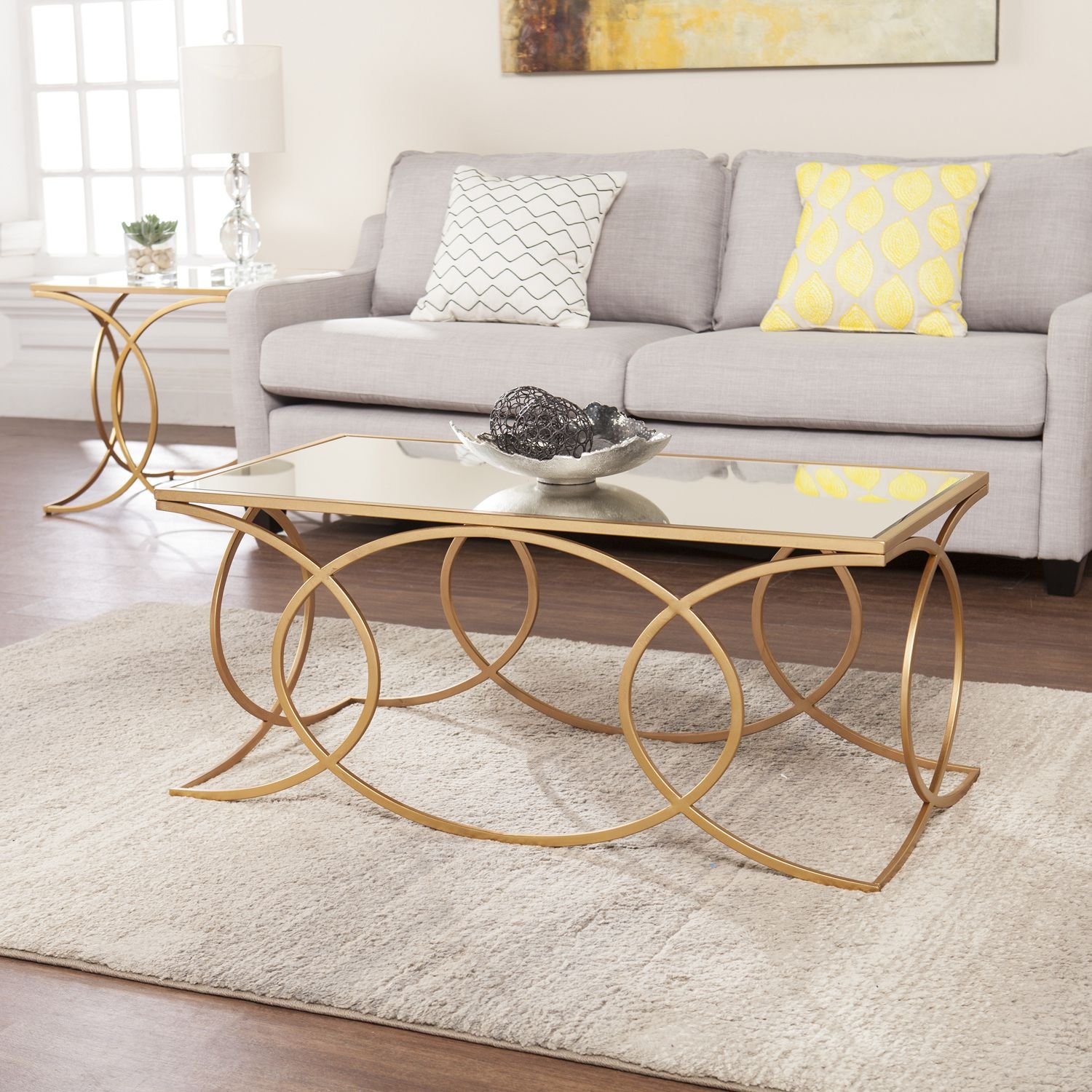
5. Tempered Glass on Brushed Gold Base
Clear tempered glass top. Geometric brushed gold frame.
Glass tables expand the visual volume of a room without moving a single wall. The brushed gold base earns the table a presence of its own — the key is the matte finish. Polished gold reads as ostentatious; brushed gold reads as refined.
6. Smoked Glass Oval
Grey-tinted oval glass. Moody, dimensional quality.
If clear glass tables are transparent lies about how tidy your living room is, smoked glass is an honest solution. The tint obscures surface mess while maintaining the lightweight quality that makes glass tables work spatially.
7. Clear Glass Over Walnut Shelf
Glass surface above. Walnut display shelf visible below.
This table operates on two levels — literally. The glass top plane reads as clean and light. The walnut shelf below grounds the piece with warmth. Used correctly, the lower shelf holds beautiful objects; used carelessly, it becomes a visible clutter magnet. Intention matters.
Solid Wood Designs: The Long Game
8. Live-Edge Walnut Slab
Natural bark-edge intact. Walnut grain showing its full depth. Contrasting base.
A live-edge table is nature’s argument against uniformity. Every slab is unique — the tree’s growth, its knots, the curve of its edge — and no manufacturer can replicate it. You’re buying something that exists once and will not exist again.
9. Japanese-Inspired Low Oak Table
Platform height. Light oak. Absolutely nothing superfluous.
Japanese design philosophy at its most useful: every element present has a reason; every absent element was a deliberate removal. This table doesn’t whisper — it maintains a very composed silence that makes the room around it feel quieter and more intentional.
10. Dark Stained Pedestal Round Table
Turned pedestal column. Circular top. Deep dark wood stain.
Classic architecture, domestic scale. The pedestal form is inherently formal — it brings a sense of occasion to the room without overdecorating it. In a living room with high ceilings or traditional bones, it’s precisely right.
11. Reclaimed Teak Rectangle
Reclaimed teak with character marks and color variation intact.
The best argument for reclaimed wood isn’t environmental — it’s aesthetic. New wood looks new. Reclaimed wood looks like it’s been somewhere. The density and oil content of old-growth teak also means it’s structurally superior to most modern alternatives.
Metal-First Designs: When Restraint Meets Resolve
12. Hammered Brass Drum
Hand-textured brass surface. Cylinder profile. Light varies across its surface constantly.
The manual texturing process means no two tables are identical. Light strikes the surface differently throughout the day and from different angles. A table that rewards the habit of looking at it.
13. Blackened Steel and Raw Concrete
Severe materials handled with care and intention.
This table needs to be anchored in softness to work. Give it a velvet sofa, a shaggy rug, layered cushions. The contrast between the table’s hardness and the room’s softness is where this design becomes genuinely beautiful rather than just confrontational.
14. Mirror-Finish Stainless Steel Cube
Polished mirror surface. Perfect geometric cube form.
This is a conceptual table as much as a functional one. It eliminates its own appearance by reflecting everything around it. In a room with strong light and intentional design, it becomes an amplifier of the space’s best qualities.
15. Antique Bronze Sculptural Base
Sculptural cast bronze base. Deliberate, simple round top that supports and defers.
The hierarchy of design is explicit: the base is the event, the surface is the support. This table knows exactly what it is and makes no compromises about it. Patina accumulates and improves it over time.
Layered and Flexible Tables: Designed for How Rooms Actually Work
16. Two-Tier Round Table With Open Shelf
Upper surface for active use and styling. Lower shelf for practical daily storage.
The two-tier format acknowledges that a coffee table serves two masters simultaneously: the room’s appearance and the room’s function. This design assigns each master its own level rather than forcing them to share one surface.
17. Nesting Table Set
Two or three tables at graduated heights. Compact together; expansive when separated.
For rooms that transition between modes — daily use and entertaining, compact and open — a nesting set is the spatial intelligence solution. It gives you more surface when you need it and nothing you don’t when you don’t.
18. Tiered Glass and Marble
Glass upper level. Marble lower level. Two heights, two materials, one coherent design.
Layering creates complexity that the eye engages with rather than slides past. The material combination is also complementary — both are premium, both read as considered, and the contrast between them is visual without being discordant.
Bold Sculptural Statements for Rooms Ready for Them
19. Freeform Resin Table
Organic resin forms. Non-repeating silhouette. Clear or pigmented.
Resin technology has matured to the point where furniture-grade pieces are genuinely durable. What sets resin apart is the unpredictability of the result — each casting is a collaboration between the maker and the material, producing something that cannot be perfectly replicated.
20. Glazed Ceramic Hourglass
Single ceramic object. Hourglass profile. Saturated matte glaze.
Ceramic furniture is still relatively rare in residential living rooms, which is exactly what gives it distinction. The form here is sculptural rather than furniture-typical — which means it contributes to the room at a visual level even before anything is placed on it.
21. Faceted Geometric Hardwood
Geometric facets carved into hardwood. Dynamic shadow lines.
This table requires good light — and it rewards it. Morning light rakes across the facets one way; evening light creates entirely different shadow compositions. Owning this table means never quite seeing the same object twice.
Compact-Scale Tables That Don’t Sacrifice Design Quality
22. Slim Oval Marble-Top Table
Reduced footprint. Oval geometry. Full marble surface at compact scale.
Small rooms are not diminished rooms — they’re rooms with specific parameters that good design can work within. This table brings the material quality of a large-scale luxury piece to a footprint that works in genuinely tight living rooms.
23. Compact Pedestal Round Under 30 Inches
Under 30-inch diameter. Column base. No wasted floor space beneath overhanging structure.
The pedestal design solves the compact-table problem elegantly: no leg corners to navigate, maximum usable surface area relative to footprint, clean clearance all around. Efficiency that looks deliberate.
24. Transparent Acrylic Table
Full transparency. Optically invisible. Functionally complete.
Acrylic furniture is often dismissed as a trend. But in genuinely small spaces where visual clutter compounds into a feeling of claustrophobia, a transparent table is not a trend — it’s a spatial solution. The floor reads continuously beneath it. The room exhales.
Mixed Materials: Designed on Contrast, Built on Intention
25. Reclaimed Wood on Forged Iron Frame
Warm salvaged wood surface. Heavy blackened iron base. Opposing material qualities in direct tension.
Great mixed-material furniture doesn’t mix materials randomly — it puts opposites in conversation. Organic versus industrial, warm versus cold, soft versus hard. This table does all of that, and the result has an authority that single-material pieces rarely achieve.
26. Marble Top With Rattan-Wrapped Base
Polished stone top. Natural woven fiber base.
This table makes an implicit argument: that luxury and naturalness are not opposed. The marble brings precision; the rattan brings handcraft. Together they describe a design sensibility that is considered and relaxed simultaneously.
27. Leather-Wrapped Surface With Metal Trim
Stitched leather tabletop. Thin perimeter metal frame.
Leather as a tabletop material is still uncommon enough to be genuinely distinctive. It’s warm to the touch in a way stone and metal cannot be. And it develops — gradually acquiring character marks, color shifts, patina — in ways that actually increase its appeal rather than signal deterioration.
Intelligently Designed Tables for Rooms That Have to Function
28. Lift-Top Wooden Table
Hinged top with concealed interior storage. Clean closed appearance.
The lift-top table is an exercise in visible and hidden simultaneously. From every angle, it presents as a clean, attractive wood surface. When needed, it reveals a storage compartment sized for the things that habitually pile up in living rooms. A piece of furniture that solves a design problem by hiding it.
29. Mid-Century Drawer Table With Tapered Legs
Tapered legs. Integrated drawer. Precise mid-century proportions.
The design language here is confident and settled — this aesthetic has been working for seventy years and will work for seventy more. The drawer provides exactly the right amount of hidden storage for the objects a coffee table inevitably collects. Functional design that doesn’t look functional until you need it to.
Finding Your Table in This List
Three filters. That’s all you need.
Your sofa geometry: Sectional → round or oval fills the curve. Straight sofa → rectangle balances the line. Mixed seating → round bridges the arrangement.
Your existing palette: Wood-heavy → glass or metal for contrast. Monochromatic neutrals → stone, resin, or mixed-material for a focal point.
Your daily frustration: Clutter → storage design. Cramped feeling → transparent or slim. Visually boring → sculptural or mixed-material.
Run those three honestly. Your field of 29 narrows itself.
The Dimension Rule That Protects Your Investment
Buy the wrong size and none of the above matters.
The proportion rule: two-thirds the length of your sofa, height equal to or just below the seat cushion surface.
Too small: the table reads as lost. Too large: the room reads as blocked. Neither error is correctable through styling.
Measure first. Buy second. Always.
You’ve Done the Research. Now Close the Loop.
Twenty-nine designs. One room. One table. One decision.
You know which one resonated. You felt it stop you while reading.
That instinct is accurate. Trust it.
The gap between a living room you tolerate and one you’re proud of is often exactly this: one deliberate furniture decision made with conviction.
Measure your space. Order the table. Watch the room respond.